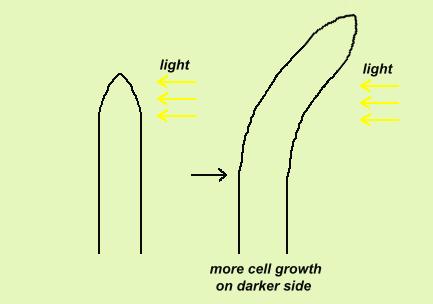
Another type of growth factor are auxins. Auxins stimulate growth of shoots by cell elongation. This is where the cell walls become loose and stretchy, the cell then gets longer. At a high auxin concentration, auxins inhibit growth in the roots. A specific type of auxin, Indoleacetic acid (IAA) is an important type. It's produced in tips of shoots in flowering plants. As the plant works to control it's growth and respond to the stimuli, IAA is moved around. It moves by diffusion and active transport over short distances, across longer distances IAA is moved via the phloem. Different levels of IAA across the plant results in uneven growth of the plant - this means the plant then grows towards the light for example.
Plants, particularly flowering plants need to respond to their surroundings like animals do, in order to increase their chances of survival. They can sense gravity so their roots grow in the right direction. They also respond to light so they can maximise the amount of light they receive for photosynthesis. Plants which climb have a sense of touch, they find things to climb so they can reach the sunlight.
Tropism is this response to directional stimulus. A directional stimulus is just a response to a stimulus coming from one direction. Plants respond to this stimulus by regulating their growth. Positive stimuli is growth towards the stimulus, negative tropism growing away from the stimulus.
The plants responses are brought about by growth factors - pretty much like the plants hormones. This is because they don't have a nervous system like us. They also don't have a circulatory system, hence the reason why growth factors can't be called hormones. Growth factors are chemicals which speed up or slow down plant growth. They're produced in parts of the plant which grows (the shoot tips and leaves). Once they've been made, they move to where they're needed in the plant. One example of a growth factor is gibberellin, this stimulates flowering and seed germination.