Total Pageviews

Showing posts with label cell. Show all posts

Monday, 9 May 2016

Sickle Cell Anaemia


Sickle Cell Anaemia is a recessive genetic disorder, it's caused by a mutation in the haemoglobin gene. This causes an altered haemoglobin protein to be produced. This means the red blood cells become sickle shaped (concave) - not the typical shape you're probably aware of. The red blood cell's concave shape means they can't flow through capillaries easily like normal red blood cells can so the capillaries can become blocked - blood flow is then restricted. This can also bring up so many more issues like organ damage and periods of acute pain.

Some people can be carriers of the sickle cell gene, amazingly, carriers of the sickle cell gene are partially protected from malaria. Because of this advantageous effect, the frequency of the sickle cell gene have increased. Unfortunately this means the likelihood of inheriting two copies of the allele are increased - overall, this means sickle cell anaemia is more prevalent in these areas.
 

Tuesday, 10 February 2015

Processes Explained: The Movement of Water Through Plants

Water needs to travel up through the roots of a plant for photosynthesis in order for a plant to survive. Roots, like everything have cells, these are root hair cells. These root hair cells are long and a thin extension of the root epidermal cell. They only live for a few weeks before they die and are replaced by others growing near the tip. Because roots absorb water, minerals and ions they constantly loose water by transpiration so this needs to be replaced.
Every root hair cell is adapted to its function because:

  • They have a large surface area because there's thousands of branches which come off of each root. 
  • The root has a thin surface layer (made up of the cell membrane and the cellulose cell wall) which allows material to move across the plant easier. 
In damp conditions when there's more water, a solution forms which contains minerals and mostly water. 

In areas of high water potential in the soil means water moves by osmosis from the soil into the root hair. 

Once it's in the root hair cell it takes one of two paths - 
  • the apoplastic pathway
  • the symplastic pathway


To be continued...

This is based on AQA AS Biology Chapter 13 Movement of water through plants. 

Monday, 29 September 2014

The Cell Theory

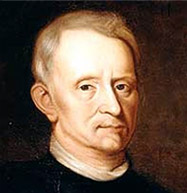
Robert Hooke (1635-1703) 
The cell theory is the scientific theory that describes the properties of cells. Cells are the basic unit of structure in all organisms - they're also the basic unit of reproduction. Over the last few centuries, there's been continual improvements made to microscopes all the time. This has allowed us to look deep into the structure of the cell. Much of this is attributed to Robert Hooke who began the study of cells (cell biology). There's been many debates over the years about cells but now they're considered the fundamental unit of life. This discussion and research led to the Cell Theory being eventually formulated in 1838, which was credited to Matthias Schleiden and Theodor Schwann. But many other scientists like Rudolf Virchow contributed too. 
The Cell Theory is widely accepted to be the foundation of biology and explains the function of the cells. 
The main principles of the cell theory are described as:
- All living organisms are composed of at least one cell
- The cell is the most basic form of life
- All cells come from pre-existing cells