Total Pageviews

Showing posts with label life. Show all posts

Monday, 31 August 2015

Sea Lions | #BigBlueLive

Sea Lions - one of the stars of last week's Big Blue Live, they reside along the coastlines and islands of the Pacific Ocean. They actually live a pretty long life (between 20 and 30 years). They also use their adaptions to their advantage. It may well be pretty dark in the oceans but they find their way around with the help of their whiskers. 

Every one of their whiskers are loosely attached to their upper lip (scientists call their whiskers vibrissa) and can rotate around with the underwater current so they can sense their food nearby. It's not surprising that their diet mainly consists of seafood, from fish and squid to crabs and clams. Although one particular breed of sea lions actually eat seals, which isn't so good, but I guess it's all nature!

Their front flippers are also very clever! They help to regulate their temperature, constrict blood vessels when it's cold, constrict the blood vessel and increase the blood vessel size when it's warm. They can also manouver their flippers into the air to cool them off- something I reckon would be ideal in the height of the summer!

Sea Lions are just amazing creatures - they might not look like much but they're unbelievably clever, form incredible underwater spectacles and are just AMAZING! :)



Monday, 29 September 2014

The Cell Theory

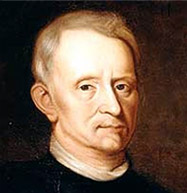
Robert Hooke (1635-1703) 
The cell theory is the scientific theory that describes the properties of cells. Cells are the basic unit of structure in all organisms - they're also the basic unit of reproduction. Over the last few centuries, there's been continual improvements made to microscopes all the time. This has allowed us to look deep into the structure of the cell. Much of this is attributed to Robert Hooke who began the study of cells (cell biology). There's been many debates over the years about cells but now they're considered the fundamental unit of life. This discussion and research led to the Cell Theory being eventually formulated in 1838, which was credited to Matthias Schleiden and Theodor Schwann. But many other scientists like Rudolf Virchow contributed too. 
The Cell Theory is widely accepted to be the foundation of biology and explains the function of the cells. 
The main principles of the cell theory are described as:
- All living organisms are composed of at least one cell
- The cell is the most basic form of life
- All cells come from pre-existing cells


Tuesday, 25 February 2014

Water found on alien worlds

The Hubble space telescope has recently detected water in the atmospheres of five distant planets. The planets are all massive Jupiter-sized bodies that orbit close to their host stars. But their extremely high temperature means that the chances of life, or at least life as we know it, is low.

However this research does open a whole number of doors into our investigation of different atmospheres of various exoplanets beyond our solar system, and ones that could potentially . The compositions of the atmosphere can be determined by the wavelengths of light that the host star transmits and the wavelengths that are partially absorbed. This study also revealed a layer of haze or dust around the planets.

Monday, 29 July 2013

Mars' atmosphere was "oxygen rich"

Scientists at NASA have discovered using their Spirit Rover that Mars once had an oxygen rich atmosphere 4 billion years ago. This was 1,500 million years prior to the formation of earth. The scientists came to this conclusion because they had analysed samples that the Spirit Rover had collected, they also compared these samples with Martian meteorites that have crashed into earth. The Scientists then were able to examine the composition of the meteorites and the samples collected, they then discovered a high percentage of oxygen. Also  Mars' distinct red colour, shows evidence of a process called oxidation, which obviously as the name suggests needs a high quantity of the oxygen. It is likely that the Red Planet was warm, wet and rusty, billions of years before Earth's atmosphere became oxygen rich, enough for life to develop on Earth. 

This could mean that life did exist on Mars, and it could mean that at some point we could end up living on Mars!