Total Pageviews

Showing posts with label heart. Show all posts

Wednesday, 13 April 2016

What is cholesterol?


We always hear about cholesterol - pretty much why too much of it's bad, and they're not wrong. There are two types of cholesterol, both good and bad. It's a soft and waxy material found in the membranes of cells. From here, it's transported into your blood stream. Partly, this is a substance produced by your body and partly absorbed from animal products you eat, this includes eggs, meat and dairy products.

The bad cholesterol is obviously the stuff we should try and limit, this is because it can clog blood vessels. The issue here, is that it increases your risk of heart attacks and strokes. Good cholesterol however removes the bad cholesterol. It takes it to the liver to be destroyed. This means that if you've got a lot of good cholesterol in your system, it actually works to protect your body from heart disease.

Thursday, 10 March 2016

How does you brain control your heart rate?

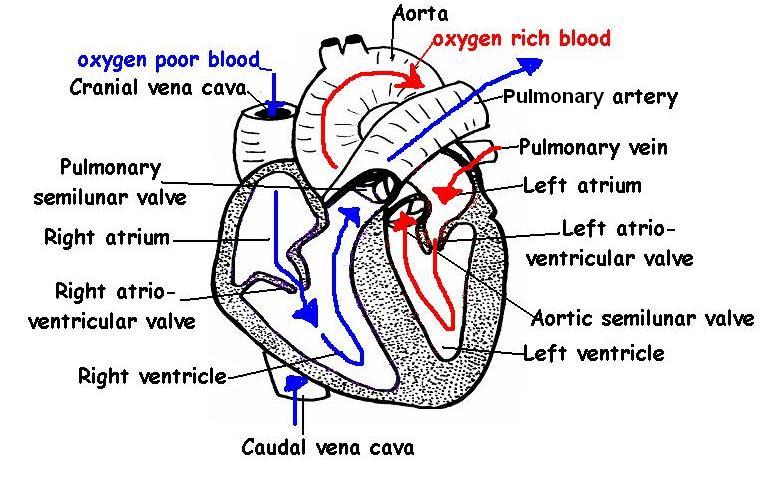
Your heart is a muscle, it pumps blood around your body as it contracts. Inside your heart is essentially a network of nodes and vessels, these help nerve impulses from your brain tell it when to contract.

One of these nodes, the SAN (sinoatrial node) generate these electrical impulses which cause the heart to contract. The rate at which the SAN works (essentially your heart rate) is unconsciously controlled by part of your brain called the medulla. Animals (including humans) alter their heart rate to respond to certain stimuli - for example, your heart will beat faster if you've just been running. This system ensures that your body receives enough blood and oxygen to function.

For the body to respond to something, it first needs to be detected. There are two main types of receptors which help to control  heart rate - baroreceptors and chemoreceptors.

Baroreceptors - these detect pressure in the aorta and vena cava. They're stimulated by high and low blood pressure. If you think about barometers which detect atmospheric pressure changes, that's essentially what a baroreceptor does, just in your heart!

Chemoreceptors - these are chemical receptors, they're found in the aorta and carotid artery (a major artery in the neck) and also in the medulla. The chemoreceptors monitor oxygen level in the blood, carbon dioxide level and pH. Knowing the pH level is very useful because its an indicator of oxygen level.

Once these receptors detect a change, electrical impulses are sent to the medulla along sensory neurones. The medulla processes this information and sends impulses to the SAN and the heart rate is adjusted.

This post specifically relates to AQA A-Level Biology Unit 5 - Responding to the Environment

Tuesday, 2 December 2014

My Advent Calendar - Day One "Wearing your heart on your sleeve"

Due to technical issues I've had to postpone the start of December until today but still - here's day 1 of  my advent calendar! Every day in December I'll be posting something from a short did you know fact to a full blog post.

Day One #SciSparksAdvent

Sometimes, us as humans can't read emotions particularly well. Scientists think help is now on the way! A team at Daejon in South Korea have developed a sensor that can be built into clothing, it detects fluctuations in electrical capacitance - the idea being that it changes the size of the goose bumps triggered by the wearers emotions. Scientists hope that that the material may eventually be used to monitor the wearers emotional states 

Thursday, 26 September 2013

Scientists grow a heart

Scientists at the University of Pìttsburgh, PA have managed to grow a functioning mouse heart from pluripotent stem cells. These are adult stem cells that act like embryonic stem cells. The team achieved this by stripping the mouse heart of its cells and replacing them with human cells.  The heart then began to beat just as before. This could then lead to stem cells being used in the future for human organ transplants. Although there are a number of ethical issues surrounding the use of stem cells.  This technological advance could be used to replace heart tissue damaged during a heart attack.