Total Pageviews

Showing posts with label science. Show all posts

Friday, 25 March 2016

MY NEW BOOK! ANIMAL A-Z!!

My new book, an A-Z guide to the Animal Kingdom will be released in the next couple of days on Amazon and Amazon Kindle. The book contains a huge range of animals, from the weird to the wonderful and everything in between. Below is a selection of animals from the book:

  • The Aye-Aye
  • Antelope
  • American Alligator
  • The Tarsier
  • Porpoise
  • Seals
  • Puffins
  • Tasmanian Devil
  • The Quagga
  • Tigers
  • Lions
  • Sea Lions
  • Clownfish
  • The Yellow Billed Hornbill
  • The Uakaris

There's this and a whole lot more in my book! When it's released, I'll add a link here so you can check it out :)




Monday, 18 January 2016

The Space Flower | #TimPeakeUpdate


Embedded image permalink

The ISS crew have made another breakthrough with their scientific exploration - they've grown a space flower. This is actually the first ever flower which has bloomed in space. This particular flower is a Zinnia flower. In December, ISS Commander - Scott Kelly tweeted an image of the plant wilted and mouldy, but the crew successfully worked their magic - and it bloomed! :) You might think, what's the point? Some plants are grown on the ISS for educational outreach - like this one! Others are grown as food for the crew - in actual fact  they grew lettuce which was ideal for the crew because they could have fresh lettuce! It might not sound like much, but when you've been eating space food for a while, fresh lettuce must taste amazing! It also opens up a whole load of avenues when it comes to maybe feeding a growing population.

Wednesday, 13 January 2016

What is the ISS? | #TimPeakeUpdate


With the arrival of British Astronaut, Tim Peake on board the ISS last year (December 15th!), every month I'll be doing an update on what he's been up to on board the ISS. The first post in the installment will be on January 25th, but first I thought I'd explain a little bit more about the ISS, what it is and what it does.

The ISS, or International Space Station orbits Earth all day, every day. It orbits around 400 km above Earth. Putting it simply, it's essentially an orbiting scientific laboratory carrying out research in the micro gravity environment. This is a particularly useful tool as it allows scientists to look at the effects of micro gravity. When you're in space, your bone density decreases. This is what happens in some diseases like osteoporosis - the benefit of this is that scientists can look at what happens to astronauts on board the ISS to find out more about diseases such as osteoporosis and put the information they gain into research and possible treatments.

Check out one of my very first posts which was all about the ISS. click here

Thursday, 7 January 2016

Happy New Year! | 2015 Review

Welcome back to my blog! I hope you all had a great Christmas and an  amazing new year!

So much in science happened last year. Until last year, Pluto was a place we knew pretty much nothing about but in 2015, we finally made it to Pluto, the images came back and the results where simply stunning. Scientists formulated a computer generated face of our past - shaking up the history of our origin. There was also a record breaking effort to travel around the world in a solar plane -  a journey however which was not difficulty free. Scientists also put in place some radical plans to protect endangered animals and to put poachers off of them. This involved things like marking shells of tortoises so they'd no longer be sell-able by poachers. Paris also held a major climate summit to formulate a deal to finally attempt to combat the growing issue of global warming. Finally, in December the UK had its first official British Astronaut, Major Tim Peake, who took off from Kazakhstan to spend 5 1/2 months on board the ISS. This event brought to a close a momentous year in science, although one which can hopefully be bettered this year!


Saturday, 19 December 2015

Reindeers | #SciSparksAdvent

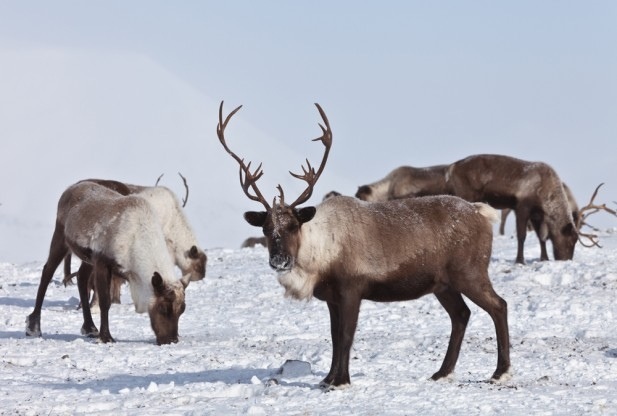
For obvious reasons - reindeers are mostly known for their link to Santa Claus and make the ideal sleigh pullers. Aside from Christmas, they're more usually seen during their mammoth Arctic migration -  during this, North American herds may travel for more than 5,000km.
Reindeers are also the only kind of deer where both males and females sport antlers, although they still can reach epic proportions in male reindeers.


Throughout the year, Reindeer mostly eat grass but they also take a fancy to virtually any other plant. In the winter - they often eat 'Reindeer lichen', moss and fungi. They are also very sociable creatures, living in groups of 10-100 groups.


As far as breeding is concerned, they mate in October and have a pregnancy of 230 days and give birth in May or June. When they do so, they only give birth to one baby who becomes fully mature at 2 years old. In the wild, they live to between 12 and 15 years old, although some live until they're 20.
Like many animals, they're hunted and have been hunted since the stone age. In northern regions in particular, they eat the meat and use the fur, skin, antlers and bones for various products. The reindeer was first domesticated around 3,000 years ago in Siberia and Scandinavia. Since then, they've been used for transport and pulling sleds. Because they can live in very cold climates - this makes them the ideal animals for the job.  


Thursday, 17 December 2015

Throwback Thursday - 2014 Christmas Lectures | #SciSparksAdvent

As the Royal Institution Christmas Lectures are coming up, I thought you might like to be reminded of the Christmas Lectures last year, so here's the first episode from last year's lectures.


Wednesday, 16 December 2015

What will Tim Peake's expedition do for UK science? | #SciSparksAdvent

Personally for Tim, he'll be able to carry out experiments which could lead to revolutionary developments. He's also acting as a guinea pig - allowing people back on Earth to monitor how his body is adapting or changing as a result of the zero gravity. During his 6 month voyage, his bones will get weaker  - he has to do 2 hours of exercise a day to combat this. When he returns it will take around a year for his body to completely get over the effects of being in zero gravity. He'll also be able to pass on his experiences - even just the view. Understandably many astronauts who have previously flown in space say that's the one thing which truly changes you - seeing it with your own eyes, and when you return you can truly appreciate it. This, apparently is known as the overview effect. It's also pioneering in the sense that no British person has done what Tim's doing. He's the first British astronaut to be spending a term on board the ISS. Other British astronauts have flown in space - Helen Sharman became the first British Citizen to travel in space when she visited the Soviet space station Mir in 1991. Others have flown either as private individuals or by taking up US citizenship.

School children across the UK can finally relate to someone on board the ISS - someone with a British accent - coming from a town near them. Follow him on Twitter @astro_timpeake where he'll hopefully be posting updates from the ISS. Whilst he's on board he's got lots of exciting plans - including opportunities for school children to link up with him on the ISS. This is the first time he's been on the ISS and no doubt he'll make the most of it.

Good luck Tim!


Thursday, 3 December 2015

Bank Card Readers | #SciSparksAdvent


By now, you've probably started thinking about your Christmas shopping and you might pay for a lot of it on a debit or credit card, but how do those card readers actually work? Well, when you insert your card, the machine works to read the information along the magnetic strip, the machines also make electrical contact with the embedded chip on the card - the users pin is then encrypted, once you've typed in the correct pin, the payment is authorized!

Happy shopping!


Tuesday, 1 December 2015

It's December! | #SciSparksAdvent

It's finally December, time to crack open the first door on your advent calendar as there's only 25 days to go until the big day!


Every day until the 25th December I'll be posting every day on Christmas science, to the highlights of the year, keep updated by following me on Twitter @Sci_Sparks and keep your eye out for new posts here!


To get into the Christmas spirit I thought I'd start off by looking at Santa - question is, what would happen if he ate all those sweets?


He'd actually have late onset diabetes by the time he was three hours into his night shift! If you assume every household the world over leaves two chocolate chip cookies, he'd be consuming 170 calories, 8g of fat and 14g of sugar in every household. This means he consumes 374 billion calories, 33,000 tonnes of sugar and 151,000 tonnes of fat - enough to keep him going for the new year!!! Still, who said chocolate chip cookies weren't delicious?? :)


Sunday, 8 November 2015

Gravity...Houston, we have a hit | Film Review

It's been exactly two years since the multi-award winning film, 'Gravity' was released in the UK. But here's my opinion of the hit film.

On the 28th January 1986 everything changed for America. The US news network, CNN carried live pictures of the routine challenger space shuttle launch. Although what was far from ordinary was the shuttle carried the first female civilian to go into space, 37 year old teacher Christa McAuliffe, chosen from over 11,000 applicants. What captured the collective imagination of the American people,soon, 73 seconds later ended in a tragic disaster. All seven crew members were killed and never made it into space.

The event, watched eagerly by millions worldwide shocked and tramatised the nation, just as the 9/11 attacks did some 15 years later. But the smash hit Gravity has the same ingredients, a female in space, Dr Ryan Stone played by Sandra Bullock going about her business with colleague Dr Kowalski played by George Clooney, when an onslaught of space debris hits the international space station (the ISS). First tethered to safety, the race is on to save the space station and more importantly to save their lives.

With the tilted Earth shimmering like a blue marble, circling them below, the film is a cinematic virtue and there's some science too.

The average space station commander logs around 4,000 hours at a time on board the football-field sized vehicle. Hollywood has officially accomplished the mission to make your children think space is cool.

Tuesday, 13 October 2015

The Young Scientists Journal Conference

Tomorrow is our 2nd science communication conference at The Kings School, Canterbury and we'd like you to join us online tomorrow. Throughout the day we'll be posting things on social media - so check out the links below.
Young Scientists Journal Conference 2015


My Twitter -  @Sci_Sparks
The Young Scientists Journal Twitter - @YSJournal
Our website - www.ysjournal.com 
Conference Website - http://events.ysjournal.com/
Facebook - The Young Scientists Journal 


Monday, 12 October 2015

FIGHT!!!! | #PictureoftheMonth

For this month I thought I'd bring you a completely different picture, this time of two very territorial birds!


http://www.nhm.ac.uk/visit/wpy/gallery/2013/images/behaviour-birds/4742/light-path.html

Wednesday, 7 October 2015

#GBBO | Does Chocolate Make you Happy?


As we reach the concluding stages of the Great British Bake off - I thought I'd look at chocolate! To many across the globe, why we like chocolate is a mystery, yet we can't stop eating it (understandably!!) But in 1996, we had our first indication of what, exactly it is that makes chocolate so delicious and addictive. The study completed in 996 looked at the effect of chocolate on the brains of American women  - they found that as they ate the chocolate, endorphins were released making the women feel happy. This then fired up many other research projects which found that chocolate actually contains many other substances known to lift your mood. Take theobromine for example which can increase heart rate, making you feel more alert combined with other substances like seratonin (an neurotransmitter associated with happiness) and caffeine may well contribute to the overall feeling when you eat chocolate. Although, researchers now believe it might just be down to craving the feelings endorphins bring us!

Saturday, 19 September 2015

The Magic of Fruit Flies


No, I'm not crazy - flies are actually amazing! To give them their proper name - Drosophilia melanogaster, they've been used in genetics research for over 100 years.  Fruit flies actually carry 75% of the genes that cause disease in humans, so they're ideal for science research. They're also pretty easy to take care of - much easier than rats or fish.  The only slight issue is that of course, they fly. Because of this, scientists need to knock them out before they're used - to do this, scientists have a number of options - they can either cool them or knock them out with carbon dioxide. The carbon dioxide method is probably the best, partly because it's cheap and also because it knocks them out long enough for the experiment to be carried out. Once the experiment is over, they wake up and are perfectly fine (if not a little dizzy :) ) Currently they're being used across labs worldwide in everything from neurological disease to manipulating genes for future treatments.


Saturday, 12 September 2015

Meerkat Family | #PictureoftheMonth

Showcasing just what I LOVE about Meerkats, all in one picture!


I don't own any rights to this picture

Friday, 11 September 2015

The Emperor of ALL Penguins :)


Emperor Penguins are the heaviest and tallest of all the species of penguins - so heavy that they can weigh up to 45 kg. In fact, they're very cleverly adapted for life in the frozen climates of the Antarctic as temperatures can plumet to as low as -60C. They, like other Penguins huddle together to conserve their warmth and protect them from the wind. What's even more amazing is, is that they rotate so the penguin(s) on the outside don't get too cold! Despite the cold weather, they even continue to breed. During their breeding 'season' they lay a single egg and leave it behind whilst they go on hunting trips which can last up to 2 months! This isn't necessarily because they're neglectful but because sometimes, they might have to travel up to 50 miles purely to reach open waters where they feed on fish, squid and krill. The very important job of keeping the eggs warm, actually falls to the male penguins and once the females return, they have a belly full of food which they then regurgitate for the newly hatched chicks. Once their chicks are nicely fed, the female takes over and keeps the chicks warm in their brood pouches. This of course, frees up the male to take over foraging duties. The males then continue to hunt for food until the chicks have developed enough to cope with the Antarctic chill.

Wednesday, 9 September 2015

What happens to old aeroplanes?

Thousands of flights take off across the world, but where do the old planes go? Well, many end up in places called boneyards - these are huge areas, often in places like deserts. The thing is when they're in areas like deserts, they're almost completely protected from corrosion. To many people's surprise, these boneyards are mostly filled with Boeing 747s as these jumbo gets gradually get replaced with newer planes. Although these might seem a little pointless, they're the key behind how airlines can continue to revolutionize air travel.

Friday, 4 September 2015

Lemurs!

Lemurs are amazing creatures but they're also endangered. Scientists have discovered an incredible evolutionary past - suggesting Lemurs where once as big as some gorillas! They're also incredibly sociable, perhaps because their family can be as big as 15. Of course, because of their endangered status, we want to do everything we can to protect them - that's why we see them in many of our zoos - in fact, in zoos they can live up to 30 years, compared to the 18 years they can live up to in the wild. When it comes to dominance, it's all girl power! Scientists think that this is an evolutionary tactic for the females as they need more resources to give birth and look after their young. They also use their scent as a huge power advantage. They get involved in "stink fights", where they rub their tails against the tree as a huge warning to the other lemurs!

Thursday, 3 September 2015

The odd life of the Red Lipped Batfish | #WeirdestAnimals

You probably never even knew this fish existed - come to that, neither did I! They do look like one of the most characterful fish I've ever seen, they have a long nose and what looks like very heavily made up red lips! Only thing is, it's only the males who have the made up lip! Scientists think that this is all down to the males trying to attract the females. Although, these fish can't swim - or at least not very well! Even though they're not great swimmers they can walk along the ocean floor using their fins as make shift legs. They're actually quite rare -you can only really find them around the Galapagos Islands, but don't worry they're harmless! The question is, what do you think of their lips?


Tuesday, 1 September 2015

My Facebook Page

I've just set up my Facebook page for this blog, I'd be enormously grateful if you could check it out and perhaps like it too! I'll be posting updates on there so you'll never miss a new post!

www.facebook.com/scisparks