Total Pageviews

Showing posts with label astronomy. Show all posts

Monday, 18 January 2016

The Space Flower | #TimPeakeUpdate


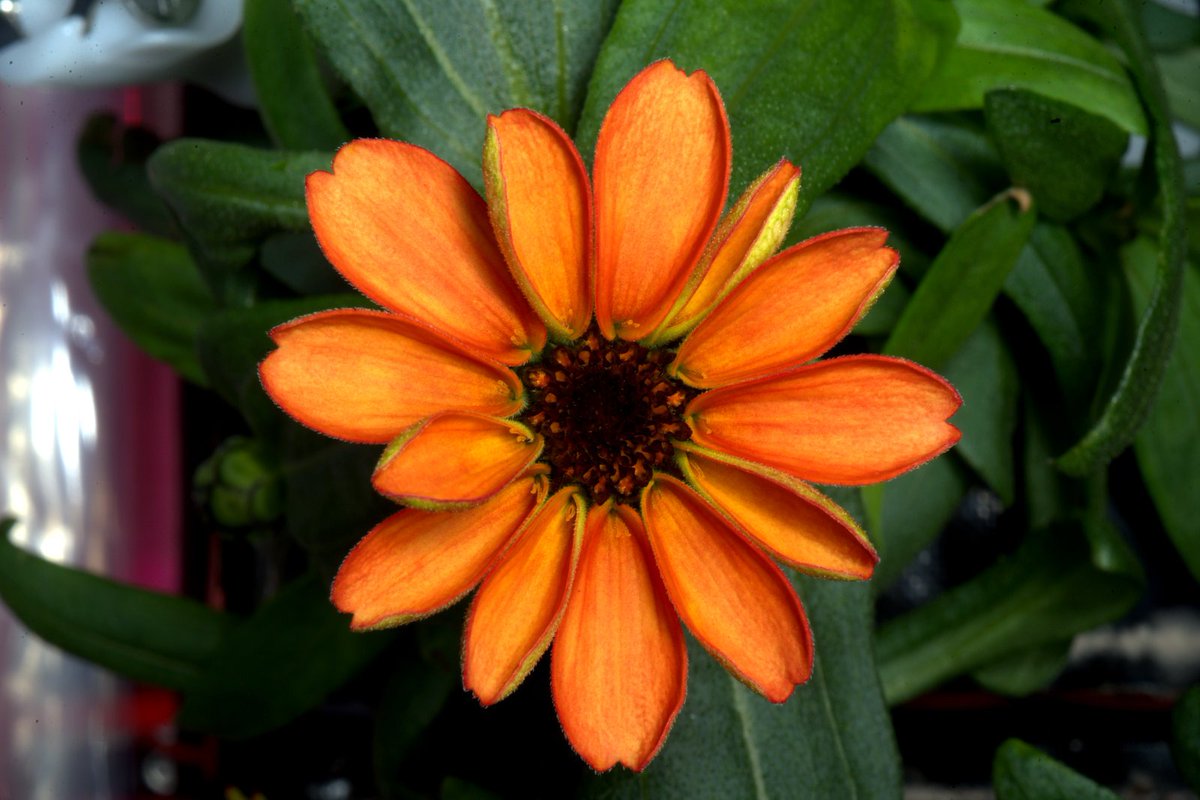
Embedded image permalink

The ISS crew have made another breakthrough with their scientific exploration - they've grown a space flower. This is actually the first ever flower which has bloomed in space. This particular flower is a Zinnia flower. In December, ISS Commander - Scott Kelly tweeted an image of the plant wilted and mouldy, but the crew successfully worked their magic - and it bloomed! :) You might think, what's the point? Some plants are grown on the ISS for educational outreach - like this one! Others are grown as food for the crew - in actual fact  they grew lettuce which was ideal for the crew because they could have fresh lettuce! It might not sound like much, but when you've been eating space food for a while, fresh lettuce must taste amazing! It also opens up a whole load of avenues when it comes to maybe feeding a growing population.

Friday, 15 January 2016

Tim Peake's Space Walk | #TimPeakeUpdate

Tim Peake during training, today, he flew the Union Jack for the
first time in the vacuum of space.

Today, at 12:55 GMT Tim Peake stepped out of the airlock and into the darkness of space, moments after his colleague Tim Kopra did just the same. They're main job, was to replace the SSU unit  - a major power channel of the ISS. They completed the important bit of the space walk well ahead of schedule, even with time to take a space selfie! The next part of the space walk involved laying a series of cables and carrying out a couple of replacements to enable future units to be installed on the ISS - not vital work. 

Just over four hours into the space walk, Tim Kopra reported that there was a small volume of water which had collected in his helmet. The mission director, as a matter of precaution, terminated the space walk. They made their way back to the airlock after collecting their tools. Both crew members remained absolutely fine - the termination was purely a matter of precaution. Ground control also - rightly so, believed that it was right to bring in both crew members in daylight, rather than potentially leaving Tim Kopra's helmet to fill with more and more water in the dark. Once the crew members returned, Scott Kelly, accompanied by Russian Cosmonauts measured the water in Tim's helmet to  be 15ml- perhaps from their cooling system. This might seem like a comparatively small amount - but in the uncertainty of space, this proved to be the best decision. Overall - it appears that the space walk was a triumph for Britain but for NASA, this is the third time astronauts have reported water in their helmet. 

Of course this space walk was an extremely proud moment - yet I'm sure nerve wracking at times for his parents, wife and children. His parents said "For us, we have immense pride, but also immense gratitude to all the people who are supporting Tim and the other astronauts."  Tim Peake also took pictures of his family on his wrist - his wife thanked him for flying their boys in space. 

Tim's space walk may have ended early, but he made history by becoming the first official British citizen to carry out a space walk. Once the problem of Tim Kopra's helmet became evident - ground control handed over the role of EVA1 (space walk leader) to Tim Peake to ensure their safe return, particularly in case the water increased in volume. The odds are now 2/1 on Tim Peake being Knighted before 2020 - what do you reckon? Leave your thoughts in the comments below.

Tim Peake is scheduled to return 5th June 2016

Wednesday, 16 December 2015

What will Tim Peake's expedition do for UK science? | #SciSparksAdvent

Personally for Tim, he'll be able to carry out experiments which could lead to revolutionary developments. He's also acting as a guinea pig - allowing people back on Earth to monitor how his body is adapting or changing as a result of the zero gravity. During his 6 month voyage, his bones will get weaker  - he has to do 2 hours of exercise a day to combat this. When he returns it will take around a year for his body to completely get over the effects of being in zero gravity. He'll also be able to pass on his experiences - even just the view. Understandably many astronauts who have previously flown in space say that's the one thing which truly changes you - seeing it with your own eyes, and when you return you can truly appreciate it. This, apparently is known as the overview effect. It's also pioneering in the sense that no British person has done what Tim's doing. He's the first British astronaut to be spending a term on board the ISS. Other British astronauts have flown in space - Helen Sharman became the first British Citizen to travel in space when she visited the Soviet space station Mir in 1991. Others have flown either as private individuals or by taking up US citizenship.

School children across the UK can finally relate to someone on board the ISS - someone with a British accent - coming from a town near them. Follow him on Twitter @astro_timpeake where he'll hopefully be posting updates from the ISS. Whilst he's on board he's got lots of exciting plans - including opportunities for school children to link up with him on the ISS. This is the first time he's been on the ISS and no doubt he'll make the most of it.

Good luck Tim!


Friday, 20 March 2015

#eclipse2015 - As it happened

Unfortunately the British weather let us down - it was very cloudy! Although it did get darker as 83% of the sun was blocked by the moon everywhere in the UK. Because we didn't actually see anything I thought I would round up some of the stunning images which have been circling on twitter and the internet today.

Here's a round up of what happened from the Telegraph


Friday, 14 March 2014

Tim Peake's Mission Needs a Name

The European Space Agency is asking people to choose a name for British astronaut Tim Peake's next mission. Any person within Europe can take part  and the winning entry needs to be snappy and it will be the official mission name, incorporated into the logo.

Major Tim Peake is due to go to the ISS towards the end of 2015 and will spend six months carrying out scientific experiments in a zero gravity environment. This actually happens each time a European astronaut goes into orbit. They encourage names that reflect an astronaut's nationality are encouraged, but they should also have a wider European flavour, and be easy to pronounce.

Tim Peake also wants to prioritise getting other people involved and engaged in the mission similar to how Chris Hadfield, former Commander of the ISS did during his stay aboard the ISS.

Friday, 17 January 2014

Chris Hadfield's Journey to Space...

The YouTube sensation Chris Hadfield first reached the headlines in December 2012 when he blasted off into space on board the Soyuz rocket to the ISS (International Space Station), his mission was to last nearly 6 months orbiting Earth at 17,500 miles per hour seeing a sunrise or sunset every 92 minutes. What's even more astonishing is that it only took 8 minutes and 42 seconds to reach the ISS.

Overall Chris Hadfield has spent 166 days in space, and has completed two space walks. He was even the first Canadian to ever walk in space.  Chris Hadfield was first inspired to be an astronaut when he was raised on a corn farm in Ontario, he watched the Apollo moon landing in 1969. At the time Canada didn't have a space agency so Chris went on to gain his glider pilot licence under the Royal Canadian Air Cadets. he joined the Canadian Armed Forces and he earned an engineering degree at the Royal Military College. As part of an exchange programme with the US Navy he also obtained a degree in  aviation systems at the University of Tennessee Space Institute.

In 1992 Chris Hadfield was one of the first astronauts ever to be excepted onto the Canadian Space programme. In November 1995 he took his first space flight to the Russian Space Station, Mir, where he flew as a 'Mission Specialist'. In April 2001 he flew again on the STS-100 and visited the ISS, here he helped to install the Canadarm2. He took his third and final space flight in December 2012 where he joined Expedition 34. In March 2013 he then took over command of the space station as part of Expedition 35. As part of the mission he was in charge of five astronauts and dozens of experiments on board the space station, on many different things including the impact of low gravity on human biology. During the mission he gained popularity by chronicling life aboard the space station. He also took many pictures of Earth and posted them through Twitter, Facebook and Tumblr to many people worldwide. His mission ended in May 2013 when he safely returned to Earth. Shortly after returning he announced his retirement, ending a 35-year career as a military pilot and astronaut


Chris Hadfield has since written a biography titled: 'An Astronaut's Guide to Life on Earth' about his 4,000 hours he has clocked up in space and a whole lot more.


Sunday, 5 January 2014

The Andromeda Galaxy

This  is the Andromeda Galaxy, which I was lucky enough
 to take as part of the GCSE Astronomy that I do every
Wednesday evening at school
This is the Andromeda Galaxy (M31) which lies around 2.5 million light years away from Earth and it our closest spiral galaxy. Observations taken in 2006 by the Spitzer Space Telescope suggests that the Andromeda Galaxy contains around 1 trillion stars. The Andromeda Galaxy is estimated to be 7.1×10¹¹  solar masses. This means that the mass of the Andromeda Galaxy is 7.1×10¹¹ times heavier than the Sun. The mass of the Sun being approximately two nonillion kilograms. The value of this constant was found by Henry Cavendish in 1798 at the University of Cambridge. He did this with a torsion balance which is designed to measure very weak forces. The invention of the torsion balance is usually credited to Charles - Augustin de Coulomb who invented it in 1777.
 

Saturday, 4 January 2014

NASA: Tales of Triumph and Disaster - Part 1


40 years ago history was made worldwide, when the first man was landed on the moon. This will tell the ever continuing story of endeavours undertaken by the USA at the forefront of manned and unmanned space exploration.


Alan Shepard Biography Photo
The Astronauts part of the Mercury Mission
On July 1958 NASA was established, with one simple brief: to beat the Russians in the space race.  Drawn from military training pilots the hope was to get humans safely into space, but quickly and to a deadline.

During the 1950’s the American’s were still trailing the Russians in the space race.  NASA firstly established the Mercury programme to train seven astronauts to be ready for space. One included Alan Shepard who NASA selected for America’s first manned mission into space. Scientists at NASA were shaken as Russia launched their first manned space flight on the 15th April 1961, only a few weeks before NASA’s first manned mission was to be launched.

On May 5th Alan Shepard’s flight was still a history-making event. Whereas Yuri Gagarin had only been a ‘passenger’ in the vehicle, Shepard was able to manoeuvre the Freedom 7 space capsule himself.  Shepard made a safe return to Earth with a splashdown at sea and recovery by helicopter, even better still this was all captured on camera and broadcast to millions worldwide. As he returned to mainland America, he was honoured with parades in Washington, New York and Los Angeles.

This historic event signalled the first of many missions by NASA and further joint projects with various contries, including Great Britain, find out more in “NASA: Tales of Triumph and Disaster – Part 2” , coming soon)

Sunday, 22 December 2013

Why do stars twinkle?

We've all heard the nursery rhyme, "Twinkle, Twinkle Little Star" but how do stars twinkle? Just before it reaches your eyes, the starlight that has crossed the cosmos has to travel through a few hundred kilometres of the earth's turbulent atmosphere. As the air moves around the light is refracted, or bent causing the apparent position of the star to 'wobble' slightly. This is why astronomers go to such effort and costs to put their telescopes in orbit, to avoid distortion because of the Earth's atmosphere.

This is a image of the Crab Nebula (M1) taken from Earth
 

Saturday, 19 October 2013

Why do galaxies collide?

Well, they collide due to their 'mutual gravitational attraction' in other words they collide because gravity draws them together. However in general galaxies are moving away from each other at an ever increasing rate, basically because of the Universe expanding at an ever increasing rate. This can be modeled simply by drawing stars or dots (imagine these as galaxies) onto a deflated balloon then blowing up the balloon. An idea that has sprung from this is the Red Shift. This is where astronomers have found that the further away a star is the more it's light has been red shifted. So this tells us that distant galaxies are moving away from us and that the further away a galaxy is the faster away its moving away from us.

The Red Shift is an example of the Doppler effect, named after the Austrian physicist Christian Doppler who proposed this theory in 1842 in Prague. You may have noticed that as a police car comes towards you the siren becomes high pitched and low pitched as the car drives away. This effect is where there is a change in frequency and wavelength. So when a source moves towards an observer the observed wavelength decreases and frequency increases and vice versa. In terms of Astronomy the results of the Doppler effect are used to identify if a nearby star is what astronomers call a binary star. This is two stars orbiting around a 'common center of mass' which is where the relative position of the distributed mass adds to zero. The brighter star is called the 'primary star' and the other the 'secondary star'

In our own 'Local Group' of galaxies for example some of the galaxies are moving away from us and some are moving towards us. Take our nearest galaxy the Andromeda galaxy for example which is currently moving towards the Milky Way at 402, 336 km/h and is due to hit us in 4 billion years.

Wednesday, 2 October 2013

How do scientists communicate with deep space probes?

Communicating with something over 11.2 billion kilometres (7 billion miles) away is no mean feat. It involves a huge network of worldwide radio antennas. These are strategically placed across the Earth so there will always be one that the probe can send signals to, 

Likewise space probes (e.g Pioneer 10) need radio antennas to send pictures, weather information and much more to. However power constraints mean the the probes transmit very weak signals that get weaker the further away the probe gets. Antennas have very large dishes to capture the probe's signal. Yet greater amplification and noise reduction is needed to boost the signal to a readable level.   

Sunday, 22 September 2013

Albert Einstein

Albert Einstein pencil sketch
 that I have drawn 

"We cannot solve our problems with the same thinking we used when we created them"

 ~ Albert Einstein 

The German born physicist Albert Einstein was born on March 14th 1879 in Württemberg, six weeks after his birth he moved to Munich, where he later on began his schooling at Luitpold Gymnasium. As a child he enjoyed classical music and even played the violin. 

One story that Einstein enjoyed telling about his childhood was of a wonder that he saw when he was about four or five years old: a magnetic compass. Okay this may not seem much with today's technology but the compasses needle's northward swing, guided by an invisible force fascinated Einstein, this wonder could even have been what inspired him to bigger and better things in his adulthood. 

In 1896 he entered the Swiss Federal Polytechnic School in Zurich where he trained as a teacher in physics and maths. Later, in 1901 he gained a diploma which went on to earn him a Swiss Citizenship. Unfortunately he was unable to find a teaching post so he accepted a position as a technical assistant in the Swiss Patent Office. This led him to work towards a doctor's degree in 1905. 

During his time at the Swiss Patent office, and his spare time he produced a lot of his remarkable work including his famous equation. He also became 'Professor Extraordinary' at Zurich. In 1911 he became 'Professor of Theoretical Physics' at Prague. When he returned to Zurich he was appointed Director of the Kaiser Wilhelm Physical Institute and a Professor at the University of Berlin. 

When anyone mentions Einstein, his famous equation - E= mc squared is probably one of the first things to jump into your head, but what does it mean? 

This famous equation pops up everywhere, it even appears as the title of one of Mariah Carey's 2008 albums. For starters the 'E' part of the equation stands for energy and the "M" mass (which is a measurement of the quantity of matter inside something). The C squared  part of the equation stands for the speed of light squared. The whole equation breaks down into this: Energy is equal to matter multiplied by the speed of light squared. 

The speed of light is a colossal number, illustrating just how much energy there is in just a tiny amount of water. One common example that physicists use is just 1 gram of water (1 ml). If the entire mass of the water (1 gram) was converted into pure energy using Einstein's equation, then the water could contain as much energy as 20,000 tons of TNT (which is an explosive) exploding. This is why such a small amount of Uranium or Plutonium can create such disastrous effects, such as the 1986 Chernobyl disaster where one of four nuclear reactors at the Chernobyl power station exploded. 

Einstein's equation does actually have relevance to twenty first century science. Einstein has provided, via his equation, a huge advancement in various fields of science including nuclear power. He has also allowed us to discover more about the inner workings of the Sun. This equation has shown us the relationship between Energy, matter and the speed of light like we have never before and this could well help us research into other areas of science in the future. 


Saturday, 21 September 2013

The People Who Want to go to Mars (And Never Return)

It’s safe to say that the majority of scientists worldwide believe that there is life way beyond Earth, but would you want to travel the 140 million miles to get to Mars and regularly endure the temperatures of -153oC at the poles of Mars? Well, tens of thousands of people have applied and prepared to leave their families, jobs and lives behind for a one-way trip to Mars all to never return to Earth.

Home to the solar system’s biggest volcano, Olympus Mons, Mars has  around 687 earth days each year and at night, the surface temperature of Mars in the summer can get as low as -53oC. Rovers on Mars have even discovered Martian spherules which have been nicknamed ‘blueberries’ which may even unlock the key to the elements that Mars once had, although scientists haven’t discovered these for certain yet although they do know that these spherules are iron rich. This is also shown because of Mars’ classic red colour which shows an extremely high percentage of iron

This “Mars One” mission (launched back in May 2012) aims to send humans on a one- way trip to the Red Planet. You might think that this amazing opportunity is a science-fiction story and wouldn’t happen for a good while yet but this programme aims to send a selected number of the public up to Mars by 2023, fully equipped with the right training needed to survive on Mars. Anyone worldwide over 18 was eligible to apply for the trip and 202,589 applications were received throughout the application process!

The selection process consists of three rounds including an interview with the ‘Mars One’ committee members and a series of challenges to prepare candidates for the potential mission that will be broadcast on TV and online.

The brave volunteers will be sent in groups of four, starting with two men and two women from four different continents. From 2023 when the first group is sent up, ‘Mars One’ (the company organising the trips) are planning to send an extra four up every two years!

However the trip isn’t without its risks, radiation exposure is particularly a concern as it can lead to an increased cancer risk, lower immune system and possible infertility. This could mean that before the applicants reach Mars, their health may be worse than when they took off from Earth! Being on Mars they wouldn’t have access to doctors and hospitals so would need to manage their own health using restricted medical supplies.


The Dutch group wants to launch a supply mission to land on Mars as soon as October 2016, and then another mission that they have called a ‘settlement rover’ to land in 2018. By 2033 the colony could reach 20 settlers on the Red Planet, although the mission could prove very costly! NASA spent £1.8 billion on Mars’ Curiosity Rover which is the biggest most advanced Rover to travel across Mars, but ‘Mars One’ has a budget of £4 billion for this project but it could prove the most worthwhile and open up so many more opportunities and avenues for exploration in science. 

Wednesday, 21 August 2013

The moon that is 40% empty space

Saturn's moon Hyperion has been described by scientists as a "fluffy snowball". Saturn's moon was closely monitored by the Cassini spacecraft that flew closer to Saturn late last year. The spacecraft found that there was a high proportion of craters which has created a irregular appearance which scientists have described as a "fluffy snowball". On board the Cassini spacecraft they have different types of cameras which they used to discover a network of underground tunnels full of empty space which is what makes the Hyperion moon 40% empty space. 


Saturn's moon Hyperion is a jumble of icy rubble (Image: NASA/JPL/Space Science Institute)


Saturday, 17 August 2013

The Perseids Meteor Shower will leave "celestial pollution"

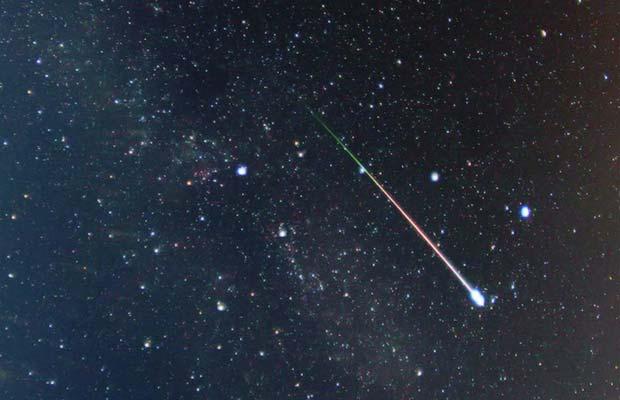
In the last couple of days you may have wrapped up warm and gone outside to view the Perseids Meteor shower if you were lucky enough to have clear skies. During these last couple of nights, in some locations up to 60 were visible in an hour. These are caused by comet dust burning up and vaporizing in the atmosphere. These 'shooting stars' can be travelling up to speeds of 36 miles per second as it begins to burn up in the atmosphere. 

This Perseid Meteor shower are byproducts from the comet: Comet 109/Swift-Tuttle which passes earth every so often. 


Scientists at the 'Gemini Observatories' believe that they will leave behind a trail of what is known as 'celestial pollution' which is a mixture of gases. One of these being Sodium which collects in a layer in our atmosphere about 60 miles up from ground level. 


Scientists have found this to be true because they can use Sodium lasers to 'excite' the sodium so they can actually create artificial meteor showers anywhere in the world that they have these lasers and whenever the scientists want. 

Monday, 29 July 2013

Mars' atmosphere was "oxygen rich"

Scientists at NASA have discovered using their Spirit Rover that Mars once had an oxygen rich atmosphere 4 billion years ago. This was 1,500 million years prior to the formation of earth. The scientists came to this conclusion because they had analysed samples that the Spirit Rover had collected, they also compared these samples with Martian meteorites that have crashed into earth. The Scientists then were able to examine the composition of the meteorites and the samples collected, they then discovered a high percentage of oxygen. Also  Mars' distinct red colour, shows evidence of a process called oxidation, which obviously as the name suggests needs a high quantity of the oxygen. It is likely that the Red Planet was warm, wet and rusty, billions of years before Earth's atmosphere became oxygen rich, enough for life to develop on Earth. 

This could mean that life did exist on Mars, and it could mean that at some point we could end up living on Mars! 

Friday, 26 July 2013

What are black holes?

Black holes vary in size. Some are only as big as a single atom, but their mass is huge. The mass is just the amount of matter or "stuff" in the object. 

There is another type of black hole that's called "stellar" these have up to twenty times more than the mass of the sun. There might be many stellar black holes in the Earth's galaxy (the Milky Way) 

The largest black holes are called "supermassive." This type of black holes have masses that total to more than 1 million suns together. Scientists have found proof that every large galaxy contains a supermassive black hole at its centre. The supermassive black hole at the centre of the Milky Way galaxy is called Sagittarius A. It has a mass equal to about 4 million suns and would fit inside a very large ball that could hold a few million Earths. 
The spiraled Milky Way galaxy

NASA is using satellites and telescopes that are traveling in space to learn more about black holes.


How Do Black Holes Form?

Scientists believe that the black holes were formed when the universe was first formed. Stellar black holes are made when the center of a very big star falls in upon itself, or collapses. When this happens, it causes a supernova. A supernova is an exploding star that blasts part of the star into space. 


Scientists think supermassive black holes were made at the same time as the galaxy they are in, so for example made at the same time the Milky Way was formed. 


The center of the Milky Way galaxy
This image of the center of the Milky Way galaxy was taken by the Chandra X-ray Observatory. Image Credit: NASA/CXC/MIT/F.K. Baganoff et al.


If Black Holes are "black" why do scientists know they exist? 


A black hole can not be seen because strong gravity pulls all of the light into the middle of the black hole. However scientists can see how the strong gravity affects the stars and gas that surround the black hole. Scientists can study stars to find out if they are flying around, or orbiting, the black hole.


When a black hole and a star are close together, high-energy light is made. This kind of light can not be seen with human eyes. Scientists use satellites and telescopes in space to see the high-energy light. 


Could a Black Hole Destroy Earth?


Black holes do not go around in space eating stars, moons and planets. Earth will not fall into a black hole because no black hole is close enough to the solar system for Earth to do that. 


An active galaxy with light shooting out of its center

Even if a black hole the same mass as the sun were to take the place of the sun, Earth still would not fall in. The black hole would have the same gravity as the sun. Earth and the other planets would orbit the black hole as they orbit the sun now. 


The sun will never turn into a black hole. The sun is not a big enough star to make a black hole. 


Sunday, 23 June 2013

The ISS: "Making the Invisible, Visible"

Currently we are using the equivalent of 1 and a half planets worth of resources in order to survive on earth. With the advancement of medical technology and discoveries, we have an ever increasing population. In the near future we will need to find another planet to live on.   

Previous Expedition 34 of the ISS
The ISS is carrying out investigations, testing out the conditions that humans would have to withstand to live on a planet such as Mars to solve this problem, without having to risk money and human health by sending shuttles to Mars or other prospective planets. Other experiments that the ISS carries out are in various fields, for example biology, human biology, physics, astronomy and meteorology (which is the study of the weather)

The ISS may be circling the earth at 7,706.6m/s at 370km, but the International Space Station does a lot more than that. The ISS was sent into orbit on the 20th November 1998.The ISS has spent a staggering 5243 days in orbit, 4530 of them have been spent occupied, that’s nearly 12 and a half years.

The cost of construction of the ISS mounted up to a massive 150 billion US dollars. The size of the ISS is approximately the size of an American football field and it is the largest man made machinery that orbits the earth.  The ISS has been visited by astronauts and cosmonauts from 15 different nations

View of a spiral cloud from the ISS (@Cmdr_Hadfield 
The technology onboard the ISS allows pioneering research to be carried out, most of which could very well be put to good use within our lifetime. One of the many experiments is tissue culture. This is where living cells can be grown in an environment where the results are not distorted by the force of gravity. These results could be used to test for treatments of deadly diseases and illnesses like cancer, without risking harm to patients whilst the treatment is still in the production stages. NASA has already developed a Bioreactor device on earth that can be used to simulate these effects that happen in space.  Every so often the ISS needs to be serviced, like a car, to do this a Soyuz space shuttle is sent out to service the ISS and deliver any essential equipment or materials to the station. Recently on the 29th March the Soyuz shuttle managed to reach the ISS in less than 6 hours, compared to the usual 2 days. This brings forward new prospects of space travel, potentially making journeys to planets such as Mars possibly achievable in a reasonable timespan.
The crew on board the ISS changes regularly. On-board the ISS currently is Commander Chris Hadfield and Flight Engineers Tom Marshburn and Roman Romanenko who began their stay when they docked their Soyuz TMA-07M which transported the crew to the ISS on Dec. 21, 2012.The crew on Expedition 35 is scheduled to remain on-board until May 2013.

You can see when the ISS passes are online here for June http://www.meteorwatch.org/iss-international-space-station-uk-passes-june-2013/

. Follow @VirtualAstro on twitter for more information on astronomy or  @Cmdr_Hadfield for amazing photos from the ISS