Total Pageviews

Wednesday, 21 August 2013

The moon that is 40% empty space

Saturn's moon Hyperion has been described by scientists as a "fluffy snowball". Saturn's moon was closely monitored by the Cassini spacecraft that flew closer to Saturn late last year. The spacecraft found that there was a high proportion of craters which has created a irregular appearance which scientists have described as a "fluffy snowball". On board the Cassini spacecraft they have different types of cameras which they used to discover a network of underground tunnels full of empty space which is what makes the Hyperion moon 40% empty space. 


Saturn's moon Hyperion is a jumble of icy rubble (Image: NASA/JPL/Space Science Institute)


Monday, 19 August 2013

If the Sun's gravity was reduced what would happen to us?

A sudden reduction in the Sun's gravity would trigger massive earthquakes on earth as we were shifted along with Earth's altered orbit. However finding something that would cause this would be very difficult! A slow reduction in gravity would mean that the earths orbit would slowly be altered. In fact what happens is the Sun's mass decreases very slightly converting it into heat and light. To put this into context the mass that the sun looses each year is about 0.25% of the sun's mass since it first was formed. Also as the Sun grows older the Sun also gets brighter which means the Earth stays warm.

Sunday, 18 August 2013

What makes human and chimp brains different?

The average weight of a chimpanzee brain is 384 grams (13.5 ounces), but human brains are around 3 and a half times heavier. Although each species has a differently structured brain, for example the brain cells in a rodent are much less efficiently packed so would therefore mean that  Rodents would  need a brain at least 35 times bigger than ours to have the same number of brain cells as an average human.

Chimps on the other hand are closely related to humans, so we share a very similar brain structure to them, however they still have around 3 and a half times less brain cells than a human - roughly 49 billion.

Chimpanzees have a lot less brain dedicated to white matter in the temporal cortex which means they have lot fewer connections in the brain (neural connections) so then they have a lesser ability to process information to the same level that humans can.


Saturday, 17 August 2013

The Perseids Meteor Shower will leave "celestial pollution"

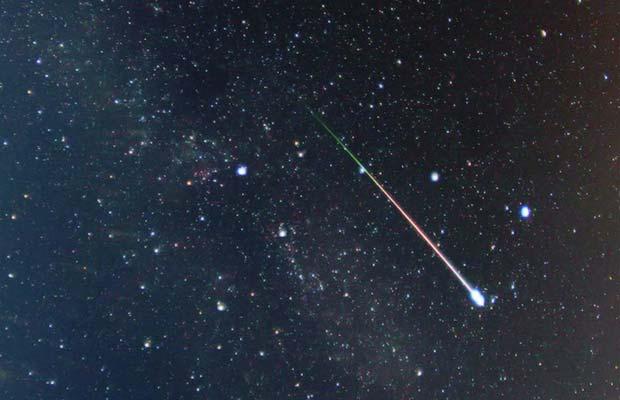
In the last couple of days you may have wrapped up warm and gone outside to view the Perseids Meteor shower if you were lucky enough to have clear skies. During these last couple of nights, in some locations up to 60 were visible in an hour. These are caused by comet dust burning up and vaporizing in the atmosphere. These 'shooting stars' can be travelling up to speeds of 36 miles per second as it begins to burn up in the atmosphere. 

This Perseid Meteor shower are byproducts from the comet: Comet 109/Swift-Tuttle which passes earth every so often. 


Scientists at the 'Gemini Observatories' believe that they will leave behind a trail of what is known as 'celestial pollution' which is a mixture of gases. One of these being Sodium which collects in a layer in our atmosphere about 60 miles up from ground level. 


Scientists have found this to be true because they can use Sodium lasers to 'excite' the sodium so they can actually create artificial meteor showers anywhere in the world that they have these lasers and whenever the scientists want. 

Tuesday, 30 July 2013

Why microbes could be changing the world's weather patterns?

Microbes are everywhere, both good and bad, and scientists at NASA believe that these microbes could be changing our weather patterns, both  here in the UK and worldwide.  
Research has been carried out across NASA compounds. One these in Texas.To carry out the experiment they send up, into space, a balloon and a mesh which collects the samples of the microbes. They collect samples at heights 70,000 ft to 10,000 ft. Scientists have analysed the aerodynamic properties of these microbes and they have found that these particular molecules can be suspended in our atmosphere for up to three weeks. 

A process called "Ice Nucleation" is happening all of the time in our atmosphere, this means that any solid particles in our atmosphere makes it a lot easier for ice to form around the solid particle however big or small this is.

 For crystals, whatever sort they are need something solid to form around, if this happens then the ice crystals can be a lot bigger than without the solid particle (in this case the microbe). When ice forms in our atmosphere, clouds form. This will eventually make it rain. 

So, if there are more microbes in the atmosphere it is easier for ice, therefore clouds to form. More clouds, mean that it will rain more. 

Monday, 29 July 2013

Mars' atmosphere was "oxygen rich"

Scientists at NASA have discovered using their Spirit Rover that Mars once had an oxygen rich atmosphere 4 billion years ago. This was 1,500 million years prior to the formation of earth. The scientists came to this conclusion because they had analysed samples that the Spirit Rover had collected, they also compared these samples with Martian meteorites that have crashed into earth. The Scientists then were able to examine the composition of the meteorites and the samples collected, they then discovered a high percentage of oxygen. Also  Mars' distinct red colour, shows evidence of a process called oxidation, which obviously as the name suggests needs a high quantity of the oxygen. It is likely that the Red Planet was warm, wet and rusty, billions of years before Earth's atmosphere became oxygen rich, enough for life to develop on Earth. 

This could mean that life did exist on Mars, and it could mean that at some point we could end up living on Mars! 

Sunday, 28 July 2013

How does the sun "burn" if there is no oxygen in space?

At first glance, an image of the sun may resemble a roaring fire. However when astronomers talk about the sun "burning" they are actually talking about a process called nuclear fusion. This process involves the forcing together of tiny hydrogen nuclei in the core. Nuclear fusion takes place in the core as nuclear fusion need high pressure and high temperatures, both of which are present in the sun's core. 


Why has the UK had such hot weather this July?

June saw the weather across the UK as decidedly mixed with some good weather, but interspersed with this, we saw many spells of wet and windy weather. This was due to the jet stream being across the Atlantic, slightly further south than what is normal for this time of year. 

A major change took place just after the start of July as the jet stream took a dramatic shift northwards. This meant that the newly placed jet stream deflected the bad weather towards Ireland and Scandinavia. Then high pressure was dominant across the UK, in meteorological terms this is known as a blocked pattern. At this time of year, high pressure generally signals good weather and this coupled with the strength of sun can bring very high temperatures 

One thing unusual for the UK is that most of the UK has benefited from this good weather, and these high temperatures haven't been confined to one area. Also we have had very few thunderstorms in the last few weeks. Most people think that these always accompany the hot weather, in this case it is because the hot weather isn't from France or Spain. 

However this hot weather isn't good for everyone, the Met Office and Public Health England have been collaborating to provide advice through the Heat Health Watch. 

Compared to last year, this hot weather is in complete contrast when we experienced a succession of weather systems that we got from the Atlantic. There was no recorded change to the position of the jet stream it was a constant feature throughout the summer of 2012.

Friday, 26 July 2013

What are black holes?

Black holes vary in size. Some are only as big as a single atom, but their mass is huge. The mass is just the amount of matter or "stuff" in the object. 

There is another type of black hole that's called "stellar" these have up to twenty times more than the mass of the sun. There might be many stellar black holes in the Earth's galaxy (the Milky Way) 

The largest black holes are called "supermassive." This type of black holes have masses that total to more than 1 million suns together. Scientists have found proof that every large galaxy contains a supermassive black hole at its centre. The supermassive black hole at the centre of the Milky Way galaxy is called Sagittarius A. It has a mass equal to about 4 million suns and would fit inside a very large ball that could hold a few million Earths. 
The spiraled Milky Way galaxy

NASA is using satellites and telescopes that are traveling in space to learn more about black holes.


How Do Black Holes Form?

Scientists believe that the black holes were formed when the universe was first formed. Stellar black holes are made when the center of a very big star falls in upon itself, or collapses. When this happens, it causes a supernova. A supernova is an exploding star that blasts part of the star into space. 


Scientists think supermassive black holes were made at the same time as the galaxy they are in, so for example made at the same time the Milky Way was formed. 


The center of the Milky Way galaxy
This image of the center of the Milky Way galaxy was taken by the Chandra X-ray Observatory. Image Credit: NASA/CXC/MIT/F.K. Baganoff et al.


If Black Holes are "black" why do scientists know they exist? 


A black hole can not be seen because strong gravity pulls all of the light into the middle of the black hole. However scientists can see how the strong gravity affects the stars and gas that surround the black hole. Scientists can study stars to find out if they are flying around, or orbiting, the black hole.


When a black hole and a star are close together, high-energy light is made. This kind of light can not be seen with human eyes. Scientists use satellites and telescopes in space to see the high-energy light. 


Could a Black Hole Destroy Earth?


Black holes do not go around in space eating stars, moons and planets. Earth will not fall into a black hole because no black hole is close enough to the solar system for Earth to do that. 


An active galaxy with light shooting out of its center

Even if a black hole the same mass as the sun were to take the place of the sun, Earth still would not fall in. The black hole would have the same gravity as the sun. Earth and the other planets would orbit the black hole as they orbit the sun now. 


The sun will never turn into a black hole. The sun is not a big enough star to make a black hole.