
Showing posts with label race. Show all posts
Showing posts with label race. Show all posts
Sunday, 27 July 2014

Friday, 25 July 2014
Making Straw Rockets!
Over Space Week, I made Straw Rockets with year 7's who absolutely loved them, so I thought I would share with you how to make them!
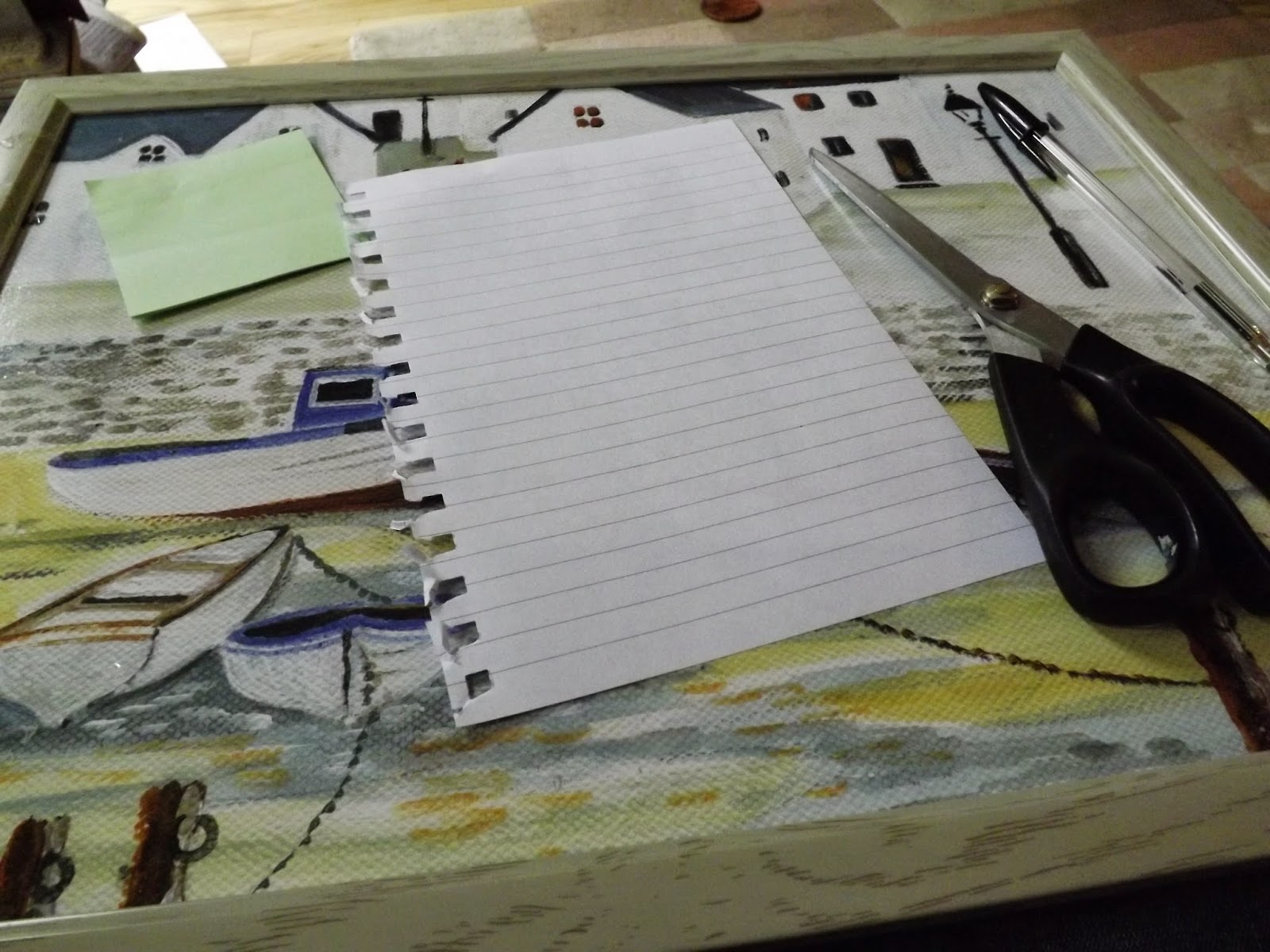 1. This is all the equipment you'll need.


 4. Have the paper at an angle then begin to roll it around you pen/pencil. Make sure it's not too tight. Once you've reached the end of the pen/pencil and if you have paper left over then chop the excess off.


 8. Get 3 of the Post it Notes ready.


- Paper (I used lined just because it's easier to cut in a straight line, but use any paper you like. Some people where using card which is okay, but difficult to roll)
- Post it Notes These just make it really easy to make the fins with as it's manipulatively VERY easy.
- Scissors
-A Straw (it's not shown in the picture as I don't have any)
- A pen (or wooden pencil) to roll your straw rocket around
2. Cut the ripped bit of the paper off if it's from a notepad :)
3. Cut a strip of paper, about the width of your little finger. The length isn't too important, just make sure it's not too short! If necessary you might need to chop it down. Get your pen ready as I've shown in the picture.
4. Have the paper at an angle then begin to roll it around you pen/pencil. Make sure it's not too tight. Once you've reached the end of the pen/pencil and if you have paper left over then chop the excess off.
5. Add sticky tape in three places ; each end and the middle. This should keep things secure.
6. If you take it off the pen/pencil, at one end you should be looking at something like the picture.
7. Pinch the end and fold over the triangle, then secure it with sticky tape.
9. Fold them in half diagonally, then cut it. This should leave you with three right angled triangles with one of the shorter sides all sticky.
10. If you've made your rocket quite small then you might want to cut down the size of the fins, do this by cutting down the longest side of the triangle.
11. Stick each of the fins on so it should look something like the picture. It's easiest to do this with the pen/pencil still in place.
12. The post it notes may not be too secure, if that's the case then secure it with a piece of sticky tape.
13. Your finished! Feel free to decorate it! You can either use it as you would a paper rocket/plane or put a straw in then blow into the straw to launch it!
Keep following my updates on #SummerofScience (@Sci_Sparks) and download my charity kindle book - http://www.amazon.co.uk/Science-Bites-Short-Tour-Universe-ebook/dp/B00LHOXRO4
http://howsciworks.blogspot.co.uk/2014/07/summer-of-science.htm
Saturday, 4 January 2014
NASA: Tales of Triumph and Disaster - Part 1
40 years ago history was made worldwide, when the first man was landed on the moon. This will tell the ever continuing story of endeavours undertaken by the USA at the forefront of manned and unmanned space exploration.
On July 1958 NASA was established, with one simple brief: to
beat the Russians in the space race.
Drawn from military training pilots the hope was to get humans safely
into space, but quickly and to a deadline.
 |
| The Astronauts part of the Mercury Mission |
During the 1950’s the American’s were still trailing the
Russians in the space race. NASA firstly
established the Mercury programme to train seven astronauts to be ready for
space. One included Alan Shepard who NASA selected for America’s first manned
mission into space. Scientists at NASA were shaken as Russia launched their
first manned space flight on the 15th April 1961, only a few weeks
before NASA’s first manned mission was to be launched.
On May 5th Alan Shepard’s flight was still a
history-making event. Whereas Yuri Gagarin had only been a ‘passenger’ in the vehicle,
Shepard was able to manoeuvre the Freedom 7 space capsule himself. Shepard made a safe return to Earth with a
splashdown at sea and recovery by helicopter, even better still this was all
captured on camera and broadcast to millions worldwide. As he returned to
mainland America, he was honoured with parades in Washington, New York and Los
Angeles.
This historic event signalled the first of many missions by
NASA and further joint projects with various contries, including Great Britain,
find out more in “NASA: Tales of Triumph and Disaster – Part 2” , coming soon)
Saturday, 23 November 2013
The Moon Landing - "One small step for man, one giant leap for human kind"
The Apollo 11 mission was the first to land humans on the moon. Neil Armstrong became the first to step onto the lunar surface on 20th July 1969. Armstrong spent about two and a half hours outside the spacecraft, Buzz Aldrin slightly less. They managed to collect 21.5 kg of lunar material for return to Earth. The third member of the mission, Micheal Collins piloted the command spacecraft alone in orbit until the pair returned to it just under a day later for the trip back to Earth.
The spacecraft was launched by a Saturn V rocket from the Kennedy Space Center in Florida on 16th July. This mission was the fifth manned mission of NASA's Apollo program. The spacecraft consisted of three parts, the command module (CM) with a cabin for the three astronauts, and the only part that was brought back to earth, the Service Module (SM). This supported the command module for things like propulsion, electrical power, oxygen and water. The last component being the Lunar Module (LM) which landed on the moon.
After being propelled to the moon, the astronauts were separated from Saturn V and traveled towards the moon for three days until they entered the lunar orbit. Armstrong and Aldrin then moved into the Lunar Module and landed in the Sea of Tranquility. They stayed on the moon for about 21 1/2 hours. The mission ended as they landed in the Pacific Ocean on 24th July.
US President John F Kennedy set proposed this as a goal in 1961 to the US Congress by saying: "before this decade is out, of landing a man on the Moon and returning him safely to the Earth". This goal was fulfilled in a broadcast live on TV to a world-wide audience which then ended the Space Race.
Subscribe to:
Posts (Atom)