Total Pageviews

Showing posts with label summer. Show all posts

Friday, 1 August 2014

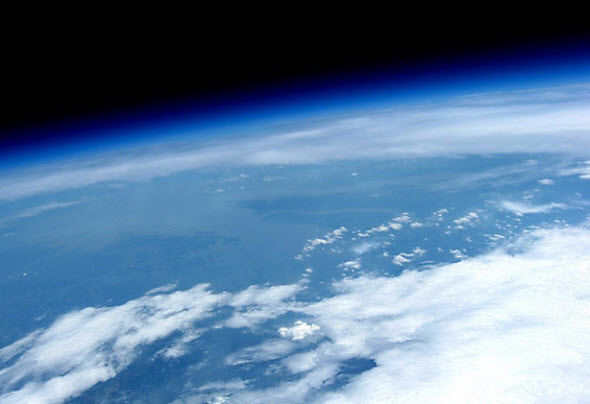
What Altitude Can You See the Curvature of Earth?

From Felix Baumgartner's daredevil skydive to teddy bears we've sent into space we're all familiar with the Earth's characteristic curvature. 100km from the Earth's surface is usually taken as where space begins - but Felix's jump was at around 24 miles (39 km), well under the height that space is considered to begin. So the answer is - no one really knows! Although passengers on board Concorde did see the curvature of Earth at altitudes of about 60,000ft. Although this gives a pretty clear indication of the figures, this can be distorted by plane windows for example. Because of this debate, research has taken place to determine the real figures. After much deliberation the real altitude is around 35,000 ft  - so next time you take a plane ride see if you can see the curvature of Earth! 


Follow the rest of my #SummerofScience and me on Twitter @Sci_Sparks. Don’t forget to download my charity eBook, Science Bites: A Short Tour of the Universe HERE. 

#SummerofScience 

Thursday, 31 July 2014

What would happen if an asteroid hit our Moon?

Most asteroids are small and slow enough that they just hit the Moon to create a new crater. Even the largest asteroid, Ceres - with  a diameter of 975km (605 miles) wouldn't cause lasting damage. On the other hand, it would cause a spectacular explosion that would be visible from Earth! To remotely displace or break up the moon, it would take an object of roughly the same size  - which won't happen!


http://www.amazon.co.uk/Science-Bites-Short-Tour-Universe-ebook/dp/B00LHOXRO4

Follow the rest of my #SummerofScience and me on Twitter @Sci_Sparks. Don’t forget to download my charity eBook, Science Bites: A Short Tour of the Universe HERE. 

#SummerofScience 

Wednesday, 30 July 2014

Why do we get used to smells?

The city people out there, might wonder why the heck farmers get used to that "countryside" smell. Although our nervous system has evolved to become progressively less sensitive to a stimulus (in this case a smell). This enables us to concentrate more on the new sights/smells that might pose more of a "danger" to us. We also have what's called an olfactory memory that discards smells that we've experienced recently - so you don't notice the smell of your house when you come back from work, but it smells different when you come back from your holiday!

Follow the rest of my #SummerofScience and me on Twitter @Sci_Sparks. Don’t forget to download my charity eBook, Science Bites: A Short Tour of the Universe HERE.

#SummerofScience  

Monday, 28 July 2014

Science through the eyes of a 16 year old

I went to the Big Bang Fair Eastern, presenting my project - communicating the science of space and space travel. Although I didn't win anything, I came back to the amazing news that my eBook that I'd made free for the day had reached the top 100 in free science books. By the end of the night my eBook reached number 3 on free science books!

I absolutely love science communication - but many teenagers are put off by what they're taught in science lessons. I reckon this is partly due to the fact revision for the GCSE's always seems to become learning huge lists of bullet point information. To a lot of teenagers - they often don't know or understand the point of what they learn.

So what can be done?? In my opinion it's about getting teenagers and school aged children to see beyond the classroom which what I've tried to address with my eBook, Science Bites. I've covered many topics that you do in school up until GCSE level - I've then adapted them to make it fun for people of all ages to read, you can download my eBook here - http://www.amazon.co.uk/Science-Bites-Short-Tour-Universe-ebook/dp/B00LHOXRO4. 

Follow the rest of my #SummerofScience and me on Twitter @Sci_Sparks. Don’t forget to download my charity eBook, Science Bites: A Short Tour of the Universe HERE. 

Saturday, 26 July 2014

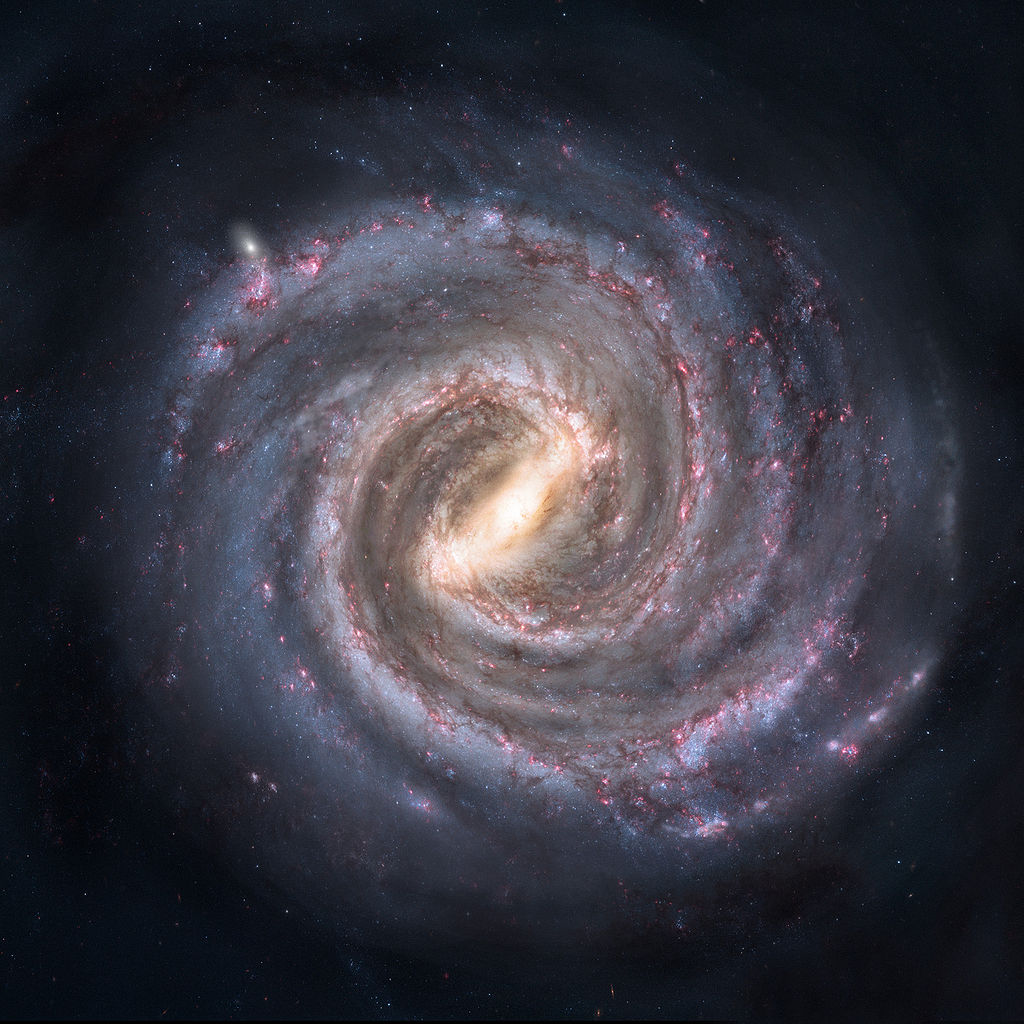
How do we know what the Milky Way looks like?

You're right, it's really difficult to deduce the shape of the Milky Way, the main reason of course being that we're in it! On the other hand, astronomers can map the distribution of the stars and motion of them really easily. This research indicates that we're orbiting a 'central bulge' , this means the planets and stars are distributed along a thin plane. The most convincing evidence for the structure of the Milky Way comes from the studies of gas clouds - here they measure the velocities and positions of these clouds. So although we know we have spiral clouds - we have no idea how many spiral arms there are!


Follow the rest of my #SummerofScience and me on Twitter @Sci_Sparks. Don’t forget to download my charity eBook, Science Bites: A Short Tour of the Universe HERE. 

Friday, 25 July 2014

Making Straw Rockets!

Over Space Week, I made Straw Rockets with year 7's who absolutely loved them, so I thought I would share with you how to make them! 

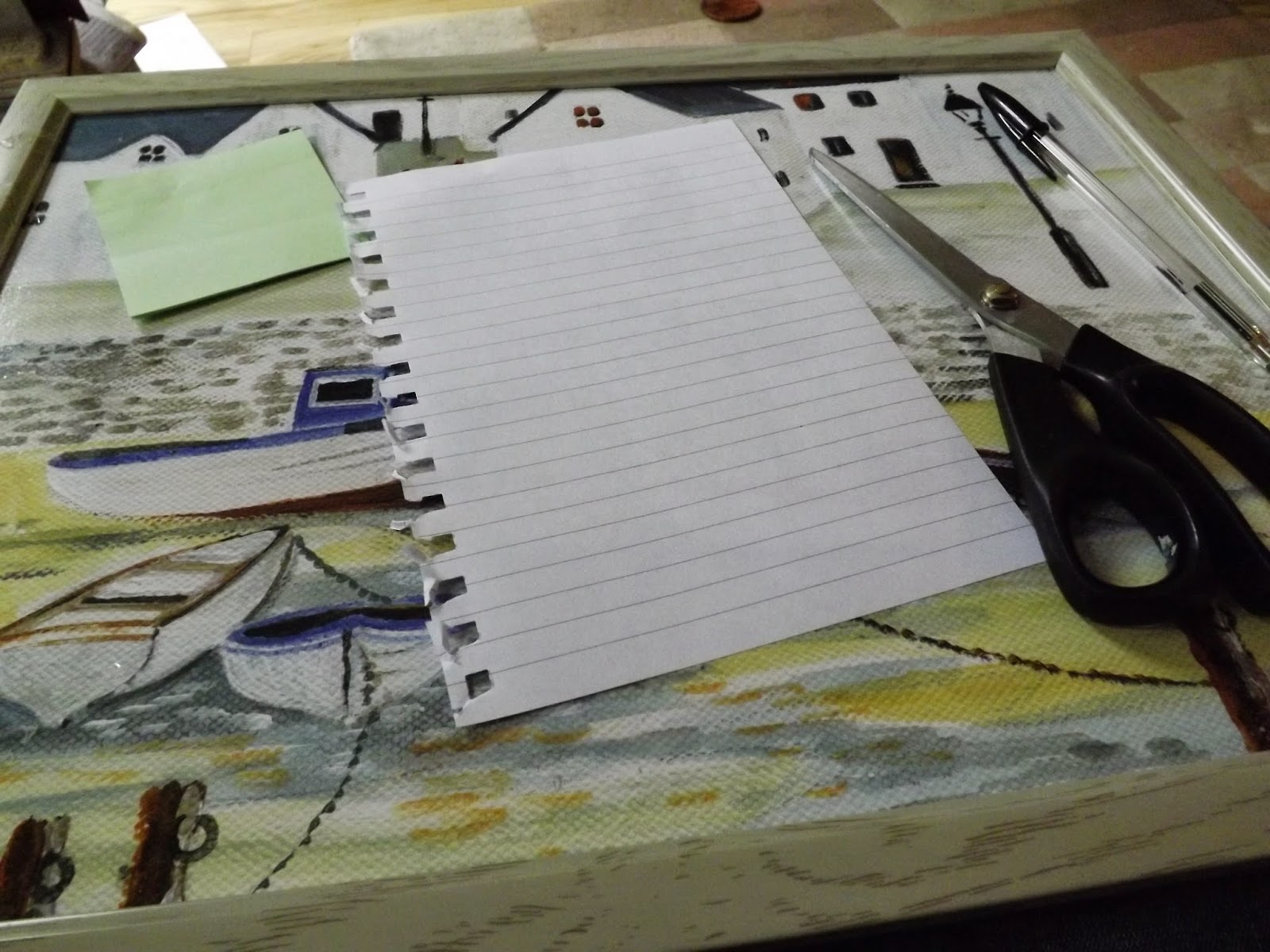
 1. This is all the equipment you'll need.
- Paper (I used lined just because it's easier to cut in  a straight line, but use any paper you like. Some people where using card which is okay, but difficult to roll)
- Post it Notes These just make it really easy to make the fins with as it's manipulatively VERY easy.
- Scissors
-A Straw (it's not shown in the picture as I don't have any)
- A pen (or wooden pencil) to roll your straw rocket around

2. Cut the ripped bit of the paper off if it's from a notepad :)


3. Cut a strip of paper, about the width of your little finger. The length isn't too important, just make sure it's not too short! If necessary you might need to chop it down. Get your pen ready as I've shown in the picture. 


4. Have the paper at an angle then begin to roll it around you pen/pencil. Make sure it's not too tight. Once you've reached the end of the pen/pencil and if you have paper left over then chop the excess off. 


5. Add sticky tape in three places ; each end and the middle. This should keep things secure. 


6. If you take it off the pen/pencil, at one end you should be looking at something like the picture. 


7. Pinch the end and fold over the triangle, then secure it with sticky tape. 


 8. Get 3 of the Post it Notes ready.
9. Fold them in half diagonally, then cut it. This should leave you with three right angled triangles with one of the shorter sides all sticky. 


10. If you've made your rocket quite small then you might want to cut down the size of the fins, do this by cutting down the longest side of the triangle. 


11. Stick each of the fins on so it should look something like the picture. It's easiest to do this with the pen/pencil still in place. 


12. The post it notes may not be too secure, if that's the case then secure it with a piece of sticky tape. 


13. Your finished! Feel free to decorate it! You can either use it as you would a paper rocket/plane or put a straw in then blow into the straw to launch it! 


Keep following my updates on #SummerofScience (@Sci_Sparks) and download my charity kindle book - http://www.amazon.co.uk/Science-Bites-Short-Tour-Universe-ebook/dp/B00LHOXRO4


http://howsciworks.blogspot.co.uk/2014/07/summer-of-science.htm

Tuesday, 22 July 2014

An Athlete's Diet...


We've been launched into the days of continuous health warnings, from not drinking too much fruit juice to too much salt. The Commonwealth games start tomorrow - but what do athletes really eat?

Food means different things to different people. Although to athletes, it means fuel - essential for exceptional athletic performance. It's surprising the amount of variety and quantity of food they actually need. Even Wimbledon Champion, Andy Murray recently revealed that his girlfriend, Kim Sears, cooks him chicken, salmon or steak during the Wimbledon championships, so really, athletes aren't that restricted.

Anyone who followed Mo Farah's astonishing performance at London 2012 - probably didn't realize the secret of his success; consuming as many as 12,000 calories a day. Of course, most of us only need somewhere in the region of 1,600 to 3,000 calories. However, combined with training and the races themselves Mo Farah burned the 12,000 calories through blistering down the track at lightning pace.

It's not just swimmers for example that pound pancakes and pasta before competition, cyclists, marathon runners and rowers also have huge amounts of carbohydrates before competition - all in an effort to fuel their super intense continuous activity.

Although athletes follow their own specific routine, surprisingly wrestlers don't eat much before competition - they're at the completely opposite end of a pretty broad spectrum. So overall - what the athletes eat depends on their sport, even within sports, male an female athletes may eat very different amounts.

Prince George turns 1 today, so the members of the Royal family will be gathering at Kensington Palace - Happy Birthday George! Follow the rest of my #SummerofScience and me on Twitter @Sci_Sparks. Don’t forget to download my charity eBook, Science Bites: A Short Tour of the Universe HERE. 


#SummerofScience Day 5

Sunday, 20 July 2014

The Great British Weather - Thunderstorms!

It's fair to say Britain isn't best known for its excellent weather and roaring sunshine. Over the past week or so, we haven't been far off the roaring sunshine - it's just it's quickly followed with rather dramatic thunderstorms! Thunder causes lightning - this is essentially a stream of electrons flowing either between clouds or from a cloud to the ground. The air surrounding this electron stream is heated to around 50,000 degrees Farhenheit. It's a staggering three times hotter than the surface of the sun. When the lightning is within our sight, we see it first as the speed of sound in air is considerably slower that that of the electron flow. The light from the flash reaches us in a fraction of a second, whereas the sound lags along like a snail following an interplanetary rocket.

Follow the rest of my #SummerofScience and me on Twitter @Sci_Sparks. Don’t forget to download my charity eBook, Science Bites: A Short Tour of the Universe HERE. 


Thursday, 17 July 2014

Summer of Science

Over my summer holidays, I'll be posting an article every day (starting from  tomorrow)  on here about all things science - so keep an eye on my blog!

Also take a look at my eBook that's currently on the kindle store- Science Bites : A Short Tour of the Universe. It's a charity eBook, so all the profits (around 50p per eBook sold) go to Keech Hospice. (http://www.amazon.co.uk/Science-Bites-Short-Tour-Universe-ebook/dp/B00LHOXRO4) It's sold around 140 copies, I now just need feedback and more sales! :)

Here, I'll be adding links to all of the posts, although please  be aware these might be a couple of days behind! :)


Follow me on Twitter @Sci_Sparks


#SummerofScience 

Wednesday, 24 July 2013

What causes heat haze?

The appearance of any object depends on the optical properties if the air between you and the object or person. These are determined by the density and temperature of the air, so any source of heat, maybe from a barbecue or the sun can cause uneven changes to the density of the air. These changes produce optical distortions which we know to be heat haze.

Tuesday, 23 July 2013

How does sunscreen work?

Sunscreen is made up of a mixture of organic and inorganic particles to protect your body from potentially harmful UV radiation. The sunlight is made up of various different types of UV radiation; these include UVA, UVB and UVC radiation. Each of these types of UV radiation is of different wavelength which makes the sunscreen easier or harder to protect your skin from burning. For example UVC radiation has a wavelength of 280 -100mm, this very short wavelength radiation are blocked by the earth’s atmosphere even before it reaches you. But not all sunscreens protect against UVA radiation and over exposure to this type of radiation can, over time cause skin cancer.

The organic particles within the sunscreen (often a chemical called octyl methoxycinnamate or oxybenzone) absorb the rays; these are then dissipated within the body as heat which therefore prevents your skin burning. The inorganic particles (often zinc oxide or titanium dioxide) reflect and scatter the radiation which forms a physical barrier and therefore also helps prevent the skin from burning. It is these inorganic particles in the sunscreen which makes it appear white; however nowadays the particles are so small the sunscreen is clear so you can’t see it.


Clearly labelled on every sunscreen bottle is the “SPF” which stands for the sun protection factor. This only measures the amount of UVB radiation protection which that particular sunscreen provides. This SPF works on the basis that you would burn if you were in direct sunlight for one hour and therefore with an SPF 15 you could stay in the sun for fifteen hours. However this should only be treated as a basis given that there is a higher level of UV radiation at midday since the sun is lower in the sky. So the amount of time that you can spend safely out in the sun depends on the time of day as well as the level of sunscreen that you have applied and how well the sunscreen has been absorbed.