Total Pageviews

Showing posts with label zoo. Show all posts

Friday, 23 October 2015

Update!

This is just a quick post to say I haven't left ;) Just over a week ago, we held the Young Scientists Journal Conference, which was a great success! You can see the pictures from the day on Twitter with the hashtag #ysjournalconf. I also had a lot of end of topic tests and so on at school! But I've sent my UCAS application for zoology and marine biology, so we'll have to wait and see! But tomorrow we're off to the Isle of Wight for 3 nights - when we're there we're planning on going to the Isle of Wight Zoo, as I love photography and animals it's going to be great!!!!


Exciting times! :) 


Wednesday, 9 September 2015

How can we tell zoo animals are happy?


In most cases, days are the gone where animals are kept in tiny enclosures with nothing to do, but now scientists have come up with a method of measuring how happy they actually are. We now have a vast array of chemicals that we can actually measure to assess this, one of the best examples is cortisol. Cortisol is a hormone secreted by the adrenal cortex in response to stressful events. We can measure this through taking blood, but for zoo animals, if they're potentially distressed anyway it's better to look at the levels in urine, faeces or saliva. However scientists need to be careful that they don't misinterpret the levels because they can be influenced by things like the age or sex of the animal. We could also use preference tests to see what's best for the animal, so from different foods to sleeping materials. Although we need to make sure we don't misinterpret those results because like us, what we prefer may not be what's best! 

Friday, 21 August 2015

The Pink Fairy Armadillo | #WeirdestAnimals


This strange Armadillo is actually the smallest kind of Armadillo with a strange fashion sense - they've got very light pink scales and fluffy white fur underneath, mostly smaller than 10cm long. They actually reside in the dry grasslands and sandy planes of central Argentina and are surprisingly skilled at digging burrows beside large ant colonies, partly as ants provide a plentiful food supply for the armadillo. When they dig, they use their large front claws to effortlessly move through the sand. They even live a life surprisingly similar to the mole, they only come out of their burrow to feed at night and are very solitary animals.


Friday, 31 July 2015

Meet the Penguins


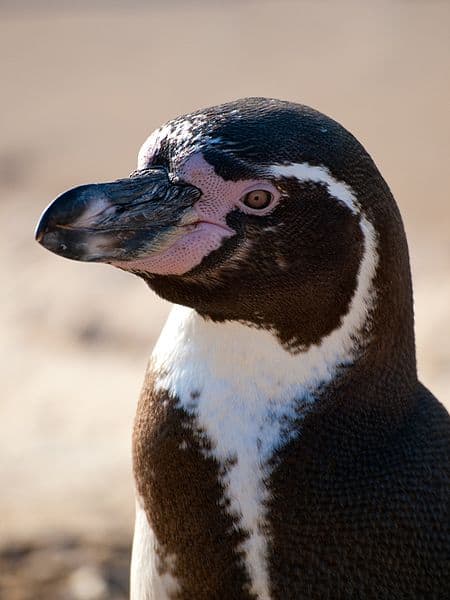
Many of us see penguins in zoos all over the world, others are lucky enough to see them in the wild. That's what one lucky London Zoo keeper got the chance to do in a TV documentary titled: Meet the Penguins. He's spent his career working with the Humboldt penguins yet never seen them in the wild, so he headed off to the wilds of Peru to catch a glimpse of the Penguins he'd spent his career working with roaming around their natural habitat. 

The problem of keeping penguins in enclosed areas, as the same with any animal, they become reliant on their keepers so it's about getting the balance between care and maintaining their natural instincts. One place where this was particularly evident was the fact that in London the keepers have to feed the penguin's chicks but in Peru they've developed their penguin colony so that the Penguins continue to feed their young and don't become reliant on their keepers. Surprisingly, penguins actually feed their young by regurgitating it into their mouths!  

However, these birds are endangered, unfortunately they can become drowned in storms, caught up in fisheries  or simply treated badly by people who want to keep penguins as pets. In fact where penguins live in protected areas like reserves they remain largely free from predators. On the most part, it's actually just the sea-lions which hold most threat for the penguins. 

Thankfully, these penguins have clever adaptions which help them to outwit their predators - for example they have flippers which are so hard they act like oars which help them to out swim the sea lions. They also have webbed feet like ducks which not only helps them paddle but also to balance when they're swimming. 

They then travelled to Lima, the capital of Peru - Peru's largest city sometimes called the City of Kings. They took the long journey across the rocky roads of Peru to a reserve, Punta San Juan. Punta San Juan is one of the richest marine environments on Earth. It's an amazing project which aims to deepen our knowledge of marine ecosystems and the previously unknown life of the Humboldt Penguin. Here, conservation is a number one priority, they even have a 3m high wall surrounding the reserve to make sure biodiversity is maintained. All around the reserve they also have boating restrictions to prevent damage through noise pollution and general disturbances. Even though these penguins have an unbelievable level of protection they still lead completely independent lives, For example they still leave the cliffs twice a day to look for food, on top of that they also breed in the isolation of caves at the back of the beaches or out of reach of their predators at the most extreme heights of the cliff. 

The humble Humboldt penguin leads an incredible life across the world and it's these amazing people like the ones at Punta San Juan that help to unlock the secrets to the penguin. 


Wednesday, 29 July 2015

RIP Cecil

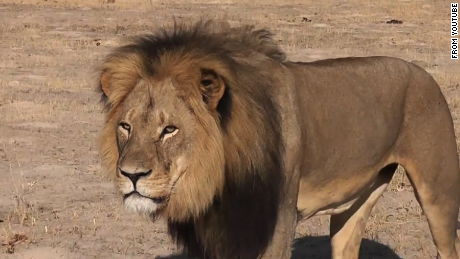
If you haven't already heard, Cecil, one of Zimbabwe's most famous lions was killed by a hunter on a hunting trip. Yesterday he paid £638 to be released on bail and is returning to court on 5th August. The hunter, a dentist from Minnesota is attempting to defend his case having carried out an unlawful hunt. Animal hunting is becoming an ever increasing problem as there are companies who hold both lawful and unlawful hunts on animals across the world and Africa, although one of the main issues with this is how do you put a price on these hunts - it's not just time and the materials but the cost of nature too. You also have to bring the characteristics of the animals into consideration. For example, Cecil was renowned for being friendly towards visitors which generated much needed tourism, particularly in a place where there's not a thriving economy. In Cecil's case he was partly driving tourism in Hwange National park - one of Zimbabwe's largest game reserves. Partly because he led two prides of lion's containing six lionesses and 12 cubs, Oxford University was studying him. The fact he was involved in scientific research also makes the problem far more complex because how can you price knowledge and further scientific developments which arise from that? The simple answer is, you cant.
What makes Cecil's death even worse is people hunt animals not just because of the 'pleasure' they get from the actual act of hunting they treat the animal that's died like a trophy - like a competition they've won. In fact, around 665 lions in Africa are killed every year for a "trophy". And sadly,Cecil's body was found skinned and beheaded according to the Zimbabwe Conservation Task Force (ZTCF). A representative from ZTCF said that Cecil never bothered anyone and a beautiful animal. Personally I think it's more about the circumstances he was killed - the killers tried to remove the GPS tag Oxford University had installed, he was treated badly after his death. And above all lions are worth so much, from tourism, to status. Whatever anyone thinks, Lions or any animal for that matter shouldn't be killed as a competition or should have a bad death or be treated badly after they've died.


#RIPCecil

Tuesday, 1 October 2013

How do gorillas raised in captivity know what's safe to eat in the wild?

By instinct. Similar to how we have evolved to enjoy the taste of the safe foods and dislike the poisonous ones, gorillas have done just the same. In the wild mountain gorillas eat leaves,shoots and stems so much so an adult male can chomp through a massive 18kg of vegetation in a day. In experiments gorillas were given over 2000 pairs of foods and they then had to choose between them. Throughout the experiments they demonstrated consistent food choices in high sugar fruits with a high ratio of sugar to fibre, this is even the same using pictures of the fruit!