So much in science happened last year. Until last year, Pluto was a place we knew pretty much nothing about but in 2015, we finally made it to Pluto, the images came back and the results where simply stunning. Scientists formulated a computer generated face of our past - shaking up the history of our origin. There was also a record breaking effort to travel around the world in a solar plane - a journey however which was not difficulty free. Scientists also put in place some radical plans to protect endangered animals and to put poachers off of them. This involved things like marking shells of tortoises so they'd no longer be sell-able by poachers. Paris also held a major climate summit to formulate a deal to finally attempt to combat the growing issue of global warming. Finally, in December the UK had its first official British Astronaut, Major Tim Peake, who took off from Kazakhstan to spend 5 1/2 months on board the ISS. This event brought to a close a momentous year in science, although one which can hopefully be bettered this year!
Total Pageviews
Showing posts with label 2015. Show all posts
Thursday, 7 January 2016
Thursday, 31 December 2015
My most viewed post of the year!
Happy New Years Eve! As it's the last day of the year, I thought its only right to take a look back at my most viewed most of the year - Enjoy the new years celebration!
Most pets liked being stroked, I do know a cat who hates it and runs a million miles every time I come near him but most cats like it!
Stroking a cat or dog releases a hormone called oxytocin. This hormone is actually released in both the owner and the animal, lowering blood pressure and reducing anxiety. Scientists assume that because these feelings are obviously pleasurable to both the owner and pet over time we've 'learnt' to continue. But why have we learnt? Scientists say that it's kind of like natural selection. This is because it's pretty much a huge survival advantage for many animals to be domesticated because not only we benefit from them but our pets get a free home, food and so on. It's this scientists believe is the reason why animals love us stroking them - a feeling which is gotten stronger over time mirroring a much smaller scale of evolution. Now, we've reached a stage where they (well most of them :) ) enjoy our company and vice versa.
Labels:
2015,
celebration,
most viewed,
new,
popular,
post,
years
Thursday, 3 December 2015
Bank Card Readers | #SciSparksAdvent
By now, you've probably started thinking about your Christmas shopping and you might pay for a lot of it on a debit or credit card, but how do those card readers actually work? Well, when you insert your card, the machine works to read the information along the magnetic strip, the machines also make electrical contact with the embedded chip on the card - the users pin is then encrypted, once you've typed in the correct pin, the payment is authorized!
Happy shopping!
Sunday, 8 November 2015
Gravity...Houston, we have a hit | Film Review
It's been exactly two years since the multi-award winning film, 'Gravity' was released in the UK. But here's my opinion of the hit film.
On the 28th January 1986 everything changed for America. The US news network, CNN carried live pictures of the routine challenger space shuttle launch. Although what was far from ordinary was the shuttle carried the first female civilian to go into space, 37 year old teacher Christa McAuliffe, chosen from over 11,000 applicants. What captured the collective imagination of the American people,soon, 73 seconds later ended in a tragic disaster. All seven crew members were killed and never made it into space.
The event, watched eagerly by millions worldwide shocked and tramatised the nation, just as the 9/11 attacks did some 15 years later. But the smash hit Gravity has the same ingredients, a female in space, Dr Ryan Stone played by Sandra Bullock going about her business with colleague Dr Kowalski played by George Clooney, when an onslaught of space debris hits the international space station (the ISS). First tethered to safety, the race is on to save the space station and more importantly to save their lives.
With the tilted Earth shimmering like a blue marble, circling them below, the film is a cinematic virtue and there's some science too.
The average space station commander logs around 4,000 hours at a time on board the football-field sized vehicle. Hollywood has officially accomplished the mission to make your children think space is cool.
Tuesday, 20 October 2015
DNA (deoxyribonucleic acid) - Profile
As James Watson and Francis Crick famously said - "the secret of life". It's a vital part of any species, how it functions and the reactions that are carried out.
When was DNA discovered?
1953, by James Watson and Francis Crick - although as with any scientific discovery they were working as part of a team. Rosalind Franklin is often credited for her contribution to the discovery of DNA.
What's it made from?
The backbone of DNA if you like is made from sugar and phosphate. The 'rungs' if you like are made from bases - adenine, cytosine, guanine and thymine which form complementary base pairings. As its full name suggests, there's also deoxyribose sugar which makes up the structure.
These complementary base pairings combined with the deoxyribose sugar and phosphate make up the 'nucleotide', lots of these join together make up one of the DNA strands. Because there are lots of these joined together - DNA is a polynucleotide.
How much DNA do we have?
A LOT! Although sequencing human DNA is in its very early stages, we do know that human DNA has around three billion base pairings.
Can we do anything with DNA?
Surprisingly, yes. This year Barack Obama announced plans to sequence the genome of around 1 million people in the US in the hope scientists can use this information to create advanced treatments, targeting specific regions of our DNA.
How do we make more of it?
You'll see in more detail exactly how DNA is replicated in my Christmas countdown posts, but in short, DNA is copied to a molecule called RNA. This is because the organelles for protein synthesis are found in the cytoplasm but DNA is bound in the nucleus. This process of copying the DNA to RNA is called transcription. Once the RNA has left the nucleus, it joins to a ribosome where it can then make a protein. This is called translation.
Wednesday, 7 October 2015
#GBBO | Does Chocolate Make you Happy?
Wednesday, 30 September 2015
The Vampire Squid
Given the proximity to Halloween - this is a very topical squid! This is the Vampire squid! It gets its name from the long arms which flow behind it, making it look like a Vampire's cape. As far as squid are concerned, this is actually quite a small squid - only about a foot in length. They prefer warmer temperatures so they can swim around more easily. They also only live in the depths of the water, this combined with their dark color means they're camouflaged really well so they can avoid predators. We don't know a lot about the Vampire Squid - in fact it's first sighting was in 1903. Although when it was first discovered, people first thought it was an Octopus! And of course because they live so far down, the only knowledge we have of them is if a fisherman accidentally catches one or any calculated research, and research costs money!
Monday, 21 September 2015
The Worldwide Internet | #FutureGadgets
Labels:
#FutureGadgets,
2015,
gadgets,
internet,
technology,
wifi
Saturday, 19 September 2015
The Greatest Voyage
Today's post, all about Charles Darwin was part of The Young Scientists Journal's guest blog on The British Exploring Society. You can see the original version here - http://www.britishexploring.org/blogs/young-scientists-journal-guest-blog.aspx?EntryId=259&tabid=343
The story of evolution begins over 100 years ago in 1809. A man called Charles Darwin was born. He was born as one of six children in a conservative Christian family. His experiences led him to be quite withdrawn and not particularly outgoing. He began his university education as most people did, following in the footsteps of his father and grandfather by securing a place studying medicine. However, he found the then brutal surgical techniques too much to handle, so he abandoned his plans to be a doctor and began collecting beetles whilst he studied Divinity at Cambridge.
Darwin decided the one thing he’d love to do would be to follow his real passion- biology. His tutor at Cambridge recommended him as a “gentlemen naturalist” for a worldwide voyage on HMS Beagle – as anyone would, he jumped at the chance.
In 1835, he left South America for the main attraction – the Galapagos islands. 600 miles off the cost of Ecuador he studied their unique, incredible ecosystem. Whilst he didn’t have any particular 'eureka' moment, he began to draft each of his observations. This was where he came up with the idea of “Natural Selection” – although, he struggled with the idea because it had contradicted everything he was taught growing up.
After a long bout of illness he’d written thousands of words on evolution yet, he had published nothing. In 1858 he realised he had to do something – and fast. A man called Alfred Russel Wallace, one of Darwin’s admirers had independently come up with the theory of evolution and was potentially about to publish his own work. If Darwin did nothing, there was a strong possibility he would get no credit for a lifetime's worth of work. Eventually they decided to present their work at the same meeting. Towards the latter end of 1858 he published the infamous“The Origin of Species by means of Natural Selection”, he said that writing it was like “living in hell”; he was riddled by doubt and petrified of the reaction he'd get from the scientific community.
If we fast forward over a hundred years his work has enabled us to understand and discover millions of species, to unlock incredible secrets of our past and a key to the future - all with the help of Charles Darwin. We now stand at a precipice where changing climates and population pressure threaten some of the species Charles Darwin spend his life investigating.
- See more at: http://www.britishexploring.org/blogs/young-scientists-journal-guest-blog.aspx?EntryId=259&tabid=343#sthash.ShKvh8Q2.dpufMonday, 14 September 2015
Space Drones | #FutureGadgets
Amazon are currently trialing the idea of delivering your parcels in record time with the help of drones, but NASA think they have potential in space. Some might say that actually anything unmanned in space is a drone but NASA want them to work on the space station. This might seem like a waste but it may well speed up the process of experiments on board the ISS - improving our lives on Earth a lot quicker than it would otherwise do! This could mean that we get quicker experimental results and faster scientific advancements, meaning revolutionary technology could be hitting your home very soon!
Monday, 7 September 2015
Super-speedy trains | #FutureGadgets
Londoners in particular are used to the packed, slow moving trains - but in a few years time this might be a thing of the past. Organisations like Paypal are developing the idea of having trains which hurtle through tunnels at around 760 mph - quicker than a commercial airliner! The idea being that, you'd travel through a vacuumed tunnel, propelled by compressed air and motors, you might see this in practice ferrying passengers between San Francisco and LA.
Tuesday, 1 September 2015
Mission to Mars has begun!
Okay, no one has actually jetted off yet NASA has begun the process to decide if humans, could, actually live on Mars. To answer, what seems like an impossible question NASA have isolated 6 astronauts near a volcano in Hawaii, mimicking what the conditions would be like on Mars. They have to live close to their living HQ with no fresh air or food and virtually no privacy. When they go outside, they have to wear a space suit, they also will be living off food similar to powdered cheese and canned tuna! The question is, could you spend a year in isolation?
Monday, 31 August 2015
COFFEE!! | #FutureGadgets
This is the first post in my #FutureGadgets series, this one is very surprising. Coffee is a staple for millions of people across the world, particularly in recent years with the rise of coffee shops - but what happens to the waste from the coffee making process? The answer is, it's currently just waste - but entrepreneurs worldwide are trying to find a use for it. A US entrepreneur thinks he's found the solution. The idea is, that with processing you could turn about 85% of the energy wasted into bio fuels for heating buildings or powering transport which could make a huge difference to the progress of global warming. Although it might not seem like it, we're talking a HUGE amount of energy, London's coffee industry could create around 200,000 tonnes of waste every year, the same amount produced by the UK's biggest supermarkets.
Saturday, 29 August 2015
TV Viewing Figures
As the X-Factor returns to our screens, doing everything in our power to conquer the TV ratings - how are those figures actually calculated? Surprisingly, the figures aren't actually compiled from every household in the nation. The Broadcasters Audience Research have recruited 12,000 people from over five thousand households and they then scale up, taking into account things like demographic (target audience) and how they view that particular program.
Friday, 21 August 2015
The Pink Fairy Armadillo | #WeirdestAnimals
This strange Armadillo is actually the smallest kind of Armadillo with a strange fashion sense - they've got very light pink scales and fluffy white fur underneath, mostly smaller than 10cm long. They actually reside in the dry grasslands and sandy planes of central Argentina and are surprisingly skilled at digging burrows beside large ant colonies, partly as ants provide a plentiful food supply for the armadillo. When they dig, they use their large front claws to effortlessly move through the sand. They even live a life surprisingly similar to the mole, they only come out of their burrow to feed at night and are very solitary animals.
Sunday, 9 August 2015
How does spider silk collect water?
There are many molecules on Earth which hold water - spider silk being one of them. In nature the leaves of some plants in the desert and the backs of desert beetles are some. In particular, spider silk has an ideal mechanism for holding water. So much so, in 2010, Chinese scientists published a paper in the journal 'Nature' where they wrote about the structure of spider silk in a lot of detail. They showed that when the spider silk gets wet, rough 'bumps' begin to form on what would otherwise be the smooth side of the silk. The idea is that these changes in texture cause changes in pressure which drives the water through and into the bumps - hence this water collecting ability. This is similar to when you see water droplets on a spiders web - scientists call this phenomenon 'spindle knots' as they kind of act like collection sites. The hope is that scientists could potentially mimic the structure of spider's silk which could be used to harvest water from moisture in fog in dry regions.
Friday, 31 July 2015
Meet the Penguins
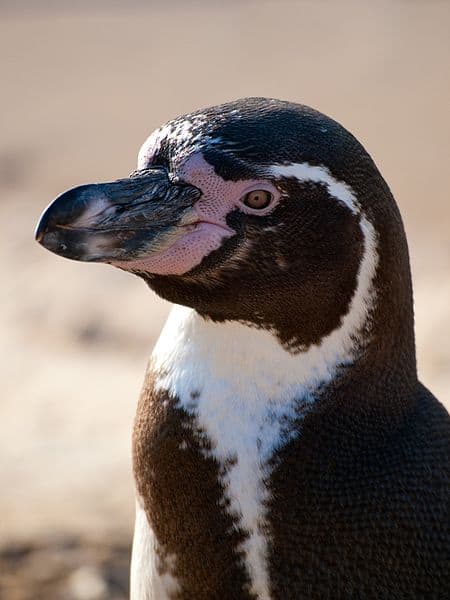
Many of us see penguins in zoos all over the world, others are lucky enough to see them in the wild. That's what one lucky London Zoo keeper got the chance to do in a TV documentary titled: Meet the Penguins. He's spent his career working with the Humboldt penguins yet never seen them in the wild, so he headed off to the wilds of Peru to catch a glimpse of the Penguins he'd spent his career working with roaming around their natural habitat.
However, these birds are endangered, unfortunately they can become drowned in storms, caught up in fisheries or simply treated badly by people who want to keep penguins as pets. In fact where penguins live in protected areas like reserves they remain largely free from predators. On the most part, it's actually just the sea-lions which hold most threat for the penguins.
Thankfully, these penguins have clever adaptions which help them to outwit their predators - for example they have flippers which are so hard they act like oars which help them to out swim the sea lions. They also have webbed feet like ducks which not only helps them paddle but also to balance when they're swimming.
They then travelled to Lima, the capital of Peru - Peru's largest city sometimes called the City of Kings. They took the long journey across the rocky roads of Peru to a reserve, Punta San Juan. Punta San Juan is one of the richest marine environments on Earth. It's an amazing project which aims to deepen our knowledge of marine ecosystems and the previously unknown life of the Humboldt Penguin. Here, conservation is a number one priority, they even have a 3m high wall surrounding the reserve to make sure biodiversity is maintained. All around the reserve they also have boating restrictions to prevent damage through noise pollution and general disturbances. Even though these penguins have an unbelievable level of protection they still lead completely independent lives, For example they still leave the cliffs twice a day to look for food, on top of that they also breed in the isolation of caves at the back of the beaches or out of reach of their predators at the most extreme heights of the cliff.
The humble Humboldt penguin leads an incredible life across the world and it's these amazing people like the ones at Punta San Juan that help to unlock the secrets to the penguin.
Wednesday, 29 July 2015
RIP Cecil
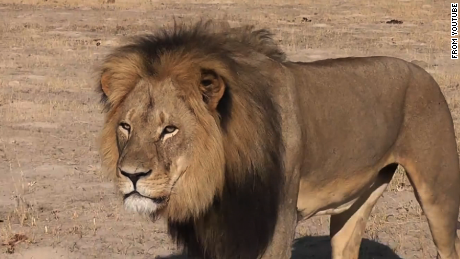
If you haven't already heard, Cecil, one of Zimbabwe's most famous lions was killed by a hunter on a hunting trip. Yesterday he paid £638 to be released on bail and is returning to court on 5th August. The hunter, a dentist from Minnesota is attempting to defend his case having carried out an unlawful hunt. Animal hunting is becoming an ever increasing problem as there are companies who hold both lawful and unlawful hunts on animals across the world and Africa, although one of the main issues with this is how do you put a price on these hunts - it's not just time and the materials but the cost of nature too. You also have to bring the characteristics of the animals into consideration. For example, Cecil was renowned for being friendly towards visitors which generated much needed tourism, particularly in a place where there's not a thriving economy. In Cecil's case he was partly driving tourism in Hwange National park - one of Zimbabwe's largest game reserves. Partly because he led two prides of lion's containing six lionesses and 12 cubs, Oxford University was studying him. The fact he was involved in scientific research also makes the problem far more complex because how can you price knowledge and further scientific developments which arise from that? The simple answer is, you cant.
What makes Cecil's death even worse is people hunt animals not just because of the 'pleasure' they get from the actual act of hunting they treat the animal that's died like a trophy - like a competition they've won. In fact, around 665 lions in Africa are killed every year for a "trophy". And sadly,Cecil's body was found skinned and beheaded according to the Zimbabwe Conservation Task Force (ZTCF). A representative from ZTCF said that Cecil never bothered anyone and a beautiful animal. Personally I think it's more about the circumstances he was killed - the killers tried to remove the GPS tag Oxford University had installed, he was treated badly after his death. And above all lions are worth so much, from tourism, to status. Whatever anyone thinks, Lions or any animal for that matter shouldn't be killed as a competition or should have a bad death or be treated badly after they've died.
| #RIPCecil |
Thursday, 19 March 2015
A-Level Revision - The Cell Surface Membrane
These revision notes refer to AQA AS Biology Chapter 3.5
The cell surface membrane is another name for the cell membrane or plasma membrane.
- It surround the cell boundary between the cell cytoplasm and the environment (this is where there is different conditions inside and outside of the cell).
The Fluid Mosaic Model
Why is this called the fluid-mosaic model?
Fluid - The Molecules move relative to one another
Mosaic - means being made up of different substances, in this case proteins and phospholipids.
How do substances pass through a cell membrane?
(a very common exam question)
- the phospholipids form a bilayer
- the phospholipids are arranged with hydrophilic heads on the outside and hydrophobic tails on the inside
- There are two types of proteins, some are passing through and some are confined to one layer
- There are other molecules present, for example: cholesterol or glycoproteins
- substances are moved DOWN the concentration gradient (from a high to low concentration)
- water and ions move through the channel proteins
- lipid soluble molecules are passed between the phospholipids
- carrier proteins are involved in facilitated diffusion.
Subscribe to:
Posts (Atom)