Total Pageviews

Showing posts with label wildlife. Show all posts

Wednesday, 30 March 2016

Marmosets | Animal Profile


Marmosets, are very small, but very cute monkeys. They're only around 22cm long, there's about 22 subspecies of them.

Compared to other monkeys, they show some very different features, they have claws rather than fingernails and strong hairs on their wrists. Unlike us, they don't have any wisdom teeth. 

Their body temperature is unbelievably variable, changing by up to 4 °C in a day. Marmosets are native to South America and have been found in Bolivia, Brazil, Colombia, Ecuador, Paraguay and Peru although they've been spotted in Central America and Mexico. Unfortunately, they have also been raised as pets.

Friday, 25 March 2016

MY NEW BOOK! ANIMAL A-Z!!

My new book, an A-Z guide to the Animal Kingdom will be released in the next couple of days on Amazon and Amazon Kindle. The book contains a huge range of animals, from the weird to the wonderful and everything in between. Below is a selection of animals from the book:

  • The Aye-Aye
  • Antelope
  • American Alligator
  • The Tarsier
  • Porpoise
  • Seals
  • Puffins
  • Tasmanian Devil
  • The Quagga
  • Tigers
  • Lions
  • Sea Lions
  • Clownfish
  • The Yellow Billed Hornbill
  • The Uakaris

There's this and a whole lot more in my book! When it's released, I'll add a link here so you can check it out :)


Wednesday, 16 March 2016

ANDi the Monkey


ANDi was the first ever genetically modified monkey. He was given the name ANDi because it's backwards for inserted DNA. Whilst he was still an unfertilised egg, he was given a simple marker gene which can be easily identified within his genetic blueprint. The idea being, that we can then have laboratory animals carrying genes associated with specific medical issues.


The Scientist's goal was to show that a foreign gene could be inserted into a primate's chromosome to produce a functional protein. They chose this gene in particular because it emits a fluorescent green glow easily seen under a microscope. They then took tissue samples from ANDi's cheek, hair and umbilical cord. These samples confirmed the presence of the gene - but they could see no green protein. This could be for a variety of reasons, some as small as the quantity of the protein could be too small. They also say that some genetically modified animals don't start producing the foreign protein until after they're a year old.


Other than that, it looks as if he's perfectly normal, happy, healthy, playing with other monkeys as he should - enjoying monkey life!

Wednesday, 3 February 2016

What are allergies?


Loads of people have allergies, some are just an annoyance others are worse. In the worst case, it can be life threatening. An allergy is an immune system response to otherwise harmless substances such as pollen, some foods or dust. Even though these aren't harmful substances, the body identifies them as a threat and responds to them. The immune system "fights" the allergen, upon the following exposure the same response is triggered.

There are many ways of managing allergies, some as simple as avoiding the allergy or medical treatments like immunotherapy. The most common of which, is to take a form of anti histamine, this lowers the level of histamine in the blood, decreasing any symptoms you might be suffering from.


Monday, 1 February 2016

What is succession?


Succession takes place if there is a very hostile environment - by hostile, I mean pretty much inhabitable. Firstly, the pioneer species colonize the area, because they've colonized the area this causes a change in the environment. So if the pioneer species are plants then the fact they're photosynthesizing changes the environment - this change makes it less hostile to other organisms. This enables other species to colonize so the biodiversity of the area increases. This means the number of the pioneer species decreases. Going forward a good few years - the stability has now increased to a point where the environment is no where near as hostile as it was and a climax community has now reached.


Wednesday, 27 January 2016

How intelligent are gorillas?


The thing with intelligence is that it's hard to measure intelligence against different animals. Some might be able to do things others just can't do. Gorilla's intelligence is displayed through their ability to make natural materials to help them gather food more efficiently. In particular, Gorillas are known for there selective ability to select branches based on length - remove leaves from them and show incredible dexterity.Scientists reckon that this level of intelligence matches that of a young child. Some Gorillas are known to have particularly high intelligence levels. Take a Western Lowland Gorilla that lived in Buffalo Zoo in 2009 for example. This Gorilla actually used a bucket to collect water. An experiment was actually carried out in 2010 where a group of them were given five gallon buckets - two of the younger gorillas were able to successfully fill the buckets up. Another gorilla in particular, Koko has been taught and mastered over 1000 signs from American sign language. Although  these signs have been simplified to get around the issue of the gorilla not being able to form as complex hand signals. However intelligent you think Gorillas are, it definitely makes you realise that Gorillas and other animals have a very different kind of intelligence!


Saturday, 23 January 2016

The Lost Clownfish


There are a number of problems which can arise as a result of Ocean Acidification - neurological problems in fish, are one of them.
 
Scientists have discovered that a lower pH can also affect neurological problems. A study showed that some young clownfish have lost the ability to navigate home because of changes to their sense of smell. This is because the fish can be attracted to smells they’d otherwise avoid, leading them to predators or leading them far away from their home. Scientists believe that the reason behind this is because of changes in a neurotransmitter in higher carbon dioxide levels. They also found that this might be reversible with the addition of a chemical. Although adding chemicals could be very costly, particularly as it would need extensive testing to make sure it wouldn’t harm other species. 

Sunday, 17 January 2016

Grizzly Bears

Scientists classify any North American subspecies of the brown bear as a grizzly bear – although they’ve actually assigned them the name of a “North American Brown Bear”. However it was first given the name of the Grizzly bear due to its characteristic long, ‘grizzly’ hair. Characteristically, they’re very solitary, active animals. They gather once a year for the “great salmon run”- where they gather at rivers to catch the mass migration of salmon. These bears have one of the lowest reproduction rates across the whole of North America. This is due to many reasons, one being that they reach sexual maturity at around 5 years old – a lot later than most land mammals in North America. When they do reproduce, a female bear produces on average 2 cubs a litter. Once the cubs leave or are killed, the female might not produce a second litter for perhaps 2 or 3 years later.

Surprisingly, Grizzly Bears play a huge ecological role; they have mutualistic relationships with some plants, spreading their seeds. The bears actually help by increasing species diversity in the plants on the forest floor.

Saturday, 19 December 2015

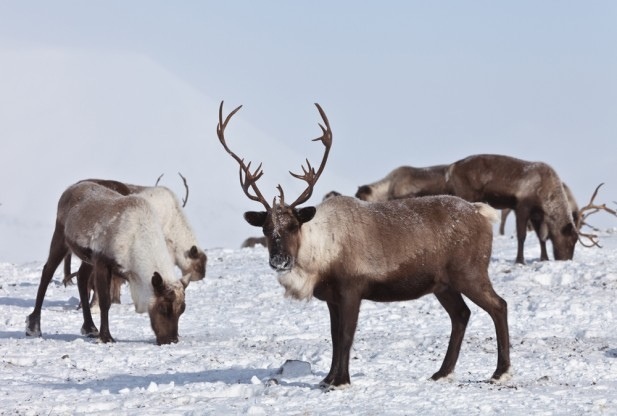
Reindeers | #SciSparksAdvent

For obvious reasons - reindeers are mostly known for their link to Santa Claus and make the ideal sleigh pullers. Aside from Christmas, they're more usually seen during their mammoth Arctic migration -  during this, North American herds may travel for more than 5,000km.
Reindeers are also the only kind of deer where both males and females sport antlers, although they still can reach epic proportions in male reindeers.


Throughout the year, Reindeer mostly eat grass but they also take a fancy to virtually any other plant. In the winter - they often eat 'Reindeer lichen', moss and fungi. They are also very sociable creatures, living in groups of 10-100 groups.


As far as breeding is concerned, they mate in October and have a pregnancy of 230 days and give birth in May or June. When they do so, they only give birth to one baby who becomes fully mature at 2 years old. In the wild, they live to between 12 and 15 years old, although some live until they're 20.
Like many animals, they're hunted and have been hunted since the stone age. In northern regions in particular, they eat the meat and use the fur, skin, antlers and bones for various products. The reindeer was first domesticated around 3,000 years ago in Siberia and Scandinavia. Since then, they've been used for transport and pulling sleds. Because they can live in very cold climates - this makes them the ideal animals for the job.  


Friday, 30 October 2015

The Tasmanian Devil


The small, solitary animal is nocturnal and spends most of its days burrowed into hollow logs. This marsupial is known to get very feisty when feeding, dozens of them can mob a single carcass. Scientists have also discovered that it has the most powerful bite of any living mammal in the animal kingdom. It will also fly into rage when it feels threatened by a predator - in fact it was these displays which led Early European settlers to call the creature the "Tasmanian Devil".  Their method of reproduction is also strange compared to other animals - Mothers give birth after about three weeks of pregnancy. They give birth to 20 or 30 tiny young. Once they're born, they crawl up their mothers fur and climb into her pouch. Unfortunately, the mother can't sustain this many young so only a handful survive.


Monday, 19 October 2015

The Lemon Shark


Sharks are one of the most well known marine predators, however they're experiencing a huge worldwide decline. Scientists have estimated that around 90% of the world's marine predators have been lost from our oceans since 1950. This loss is primarily due to overfishing and was entirely preventable. The demand for shark products on Asian markets are ever increasing - sharks are also suffering from habitat loss. Many shark species use specific areas such as waters and surrounding mangroves.

Bimini is an island surrounded by mangroves. In fact, the island is the westernmost district of the Bahamas - 53 miles due east of Miami. The island is actually the closest point within the Bahamas to the US. Because of its healthy marine ecosystem it's a tourist hot spot. The surrounding mangroves provide nursery areas for sharks, other fish, conch and lobster. The lemon shark is perhaps one of most significant nearby species. The lemon sharks have been studied by the Bimini Biological Field Station for over 25 years. They're large species at the top of the food chain - this makes them the apex predator. They are fully grown at about 12-15 years. Once they reach this age, they're sexually mature. From here, they pup every two years for the rest of their life. The usual litter size is between 4 and 18 young. These sharks can live for over 30 years. They can grow a staggering 3 metres long. As part of their research, the scientists tag the sharks to monitor their movement and behaviour. As a result of this tagging it was found that they actually travel very long distances, one individual was tracked for over 1000km. The main idea is that once they've tagged the shark, scientists can look at how the shark behaves and interacts with the oceans.


Monday, 12 October 2015

FIGHT!!!! | #PictureoftheMonth

For this month I thought I'd bring you a completely different picture, this time of two very territorial birds!


http://www.nhm.ac.uk/visit/wpy/gallery/2013/images/behaviour-birds/4742/light-path.html

Monday, 5 October 2015

The Elephant

Elephants, the largest land animals in the world, have a huge heart. Their heart weighs between 26 and 47 pounds! They actually have a life expectancy similar to humans - over 70 years. Also like humans they can laugh and have a pretty good memory although they can't jump. They are also very sociable and are very sensitive animals - they know when other elephants are sad or happy. As a 'hello' they wrap their trunks together as a display of affection. In total, their trunks have around 40,000 muscles! Elephants have particularly crafty ears. They have large, thin ears - they're made up of a complex network of blood vessels which work to regulate the elephant's temperature. The Elephants circulate blood around their ears to cool them down.


Saturday, 26 September 2015

The Tarsier


Okay, so I reckon evolution was VERY drunk when this little creature with HUGE eyes first walked on our planet. Unsurprisingly, they're not the most common of creatures- in fact, they're more or less, only found on the islands in Southeast Asia. Because they're not very common we don't actually know a lot about them, we don't really know why they have SUCH big eyes! The only real explanation scientists can come up with is that its down to a mutation in their DNA, which codes for their eyes. One of the other problems facing scientists is that this small primate is incredibly shy around humans, which of course provides quite a big problem for scientists! They're also incredibly athletic, with an unusually long anklebone enabling it to jump distances more than 40 times its own body length.


Thursday, 24 September 2015

The Clouded Leopard


By far, this leopard is one of the most agile creatures on Earth. The Clouded Leopard has a distinctive, tawny grey coat-which is why they were given their name. It cleverly uses its long tail to help keep its balance, as it leaps from tree to tree in the dense rain forests of Southeast Asia. As far as their diet is concerned - it's incredibly varied, from birds to monkeys and wild pigs.

Unfortunately they're now at risk of extinction - all because their habitat is being rapidly destroyed through deforestation. They've also been hunted for its distinctive fur, teeth and bones and much like the tiger, their teeth and bones are used in traditional Chinese medicine.

Historically, clouded leopards  were found across much of Southeast Asia, particularly around Nepal. Now we don't know much about the Clouded leopard, because they're so reclusive and spend most of their time in forests, sometimes up to 8,000 feet up. I think the fact we don't know much about clouded leopards, just makes them better!


Friday, 18 September 2015

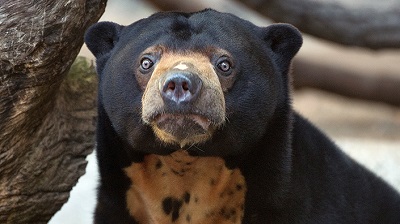
The Sun Bear | #WeirdestAnimals

This amazing bear is the smallest member of the bear family and lives in the dense forests of Southeast Asia.

They take their name from the bib-shaped golden patch on their chest which legend says, represents the rising sun. They're also nicknamed the dog bear as they have the same kind of build a short muzzle nose. To stop them overheating, they have a sleek, black coat which is also thick and coarse to provide protection from things like twigs and branches - but also to keep dry!

Ironically Sun bears are nocturnal, lumbering through the forests by night, snacking on berries and so on- everything even up to small rodents. They also have a huge tongue which is perfect for extracting honey from bees nests - giving them their other nickname, the 'honey bear'.  We don't actually know a lot about honey bears, we don't even have enough data to know how many there are in the wild. Having said that, because of the high deforestation and poaching levels scientists aren't hopeful - they might actually be in danger of extinction.


Monday, 14 September 2015

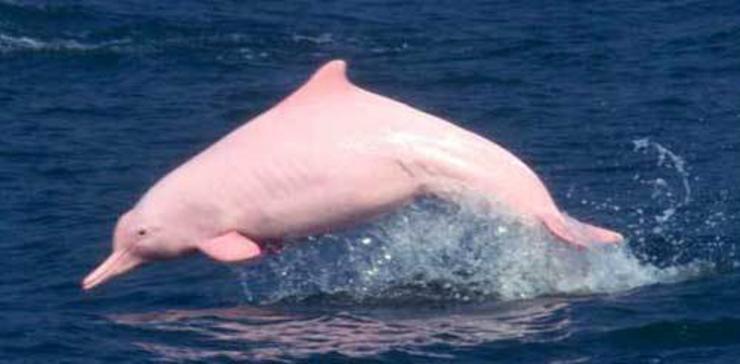
The Enchanted Pink Dolphin


The Pink Dolphin is literally like something out of a fairy tale. In total, there's five species of dolphins that reside in out rivers, but one of the most popular of these is the pink dolphin who lives in the Amazon River. Even though these Dolphins are comparatively popular along the Amazon River they're still endangered like the other species of dolphin.

These incredibly unique dolphins have an incredibly varied diet, from crabs and small fish to bigger animals like catfish and even small turtles. The dolphins can also move their head up to 180 degrees thanks to some of their vertebrae not being fused which is great for hunting in shallow waters.

The Pink Dolphin is also often Albino making them look very unique but this also brings them loads of different health problems. For example if they're pink they have a lot lower levels of the pigment melanin, which on top of protecting them from the sunlight, it also plays a vital role in their eyesight. Without it they have extremely poor vision and that's why we don't often see them!


Sunday, 13 September 2015

Mini Pigs!


Since our visit to the Countess of Warwick Country Show a couple of weeks back where we saw pigs and their piglets, I began wondering about Mini Pigs (partly as they definitely have the cuteness factor! However you might be looking at a very hefty price tag, because they're so social they really need to be bought in pairs - however, they are hypoallergenic! These pigs are also surprisingly intelligent and, if I'm honest - dog like! They can solve complex problems, swim, dream, understand names, have an amazing memory - scientists have even found that they can be smarter than an average 3 year old child! What's even better is that they've got a great sense of direction so they can find their way back home from a fair distance away. However, sometimes they can grow bigger than promised, so sometimes owners abandon them - which of course leaves a bigger problem for the pig- where does the pig go now?

Friday, 11 September 2015

The Emperor of ALL Penguins :)


Emperor Penguins are the heaviest and tallest of all the species of penguins - so heavy that they can weigh up to 45 kg. In fact, they're very cleverly adapted for life in the frozen climates of the Antarctic as temperatures can plumet to as low as -60C. They, like other Penguins huddle together to conserve their warmth and protect them from the wind. What's even more amazing is, is that they rotate so the penguin(s) on the outside don't get too cold! Despite the cold weather, they even continue to breed. During their breeding 'season' they lay a single egg and leave it behind whilst they go on hunting trips which can last up to 2 months! This isn't necessarily because they're neglectful but because sometimes, they might have to travel up to 50 miles purely to reach open waters where they feed on fish, squid and krill. The very important job of keeping the eggs warm, actually falls to the male penguins and once the females return, they have a belly full of food which they then regurgitate for the newly hatched chicks. Once their chicks are nicely fed, the female takes over and keeps the chicks warm in their brood pouches. This of course, frees up the male to take over foraging duties. The males then continue to hunt for food until the chicks have developed enough to cope with the Antarctic chill.

Wednesday, 9 September 2015

How can we tell zoo animals are happy?


In most cases, days are the gone where animals are kept in tiny enclosures with nothing to do, but now scientists have come up with a method of measuring how happy they actually are. We now have a vast array of chemicals that we can actually measure to assess this, one of the best examples is cortisol. Cortisol is a hormone secreted by the adrenal cortex in response to stressful events. We can measure this through taking blood, but for zoo animals, if they're potentially distressed anyway it's better to look at the levels in urine, faeces or saliva. However scientists need to be careful that they don't misinterpret the levels because they can be influenced by things like the age or sex of the animal. We could also use preference tests to see what's best for the animal, so from different foods to sleeping materials. Although we need to make sure we don't misinterpret those results because like us, what we prefer may not be what's best!