Total Pageviews

Monday, 3 August 2015

Why do cats and dogs like being stroked?

Most pets liked being stroked, I do know a cat who hates it and runs a million miles every time I come near him but most cats like it!
Stroking a cat or dog releases a hormone called oxytocin. This hormone is actually released in both the owner and the animal, lowering blood pressure and reducing anxiety. Scientists assume that because these feelings are obviously pleasurable to both the owner and pet over time we've 'learnt' to continue. But why have we learnt? Scientists say that it's kind of like natural selection. This is because it's pretty much a huge survival advantage for many animals to be domesticated because not only we benefit from them but our pets get a free home, food and so on. It's this scientists believe is the reason why animals love us stroking them - a feeling which is gotten stronger over time mirroring a much smaller scale of evolution. Now, we've reached a stage where they (well most of them :) ) enjoy our company and vice versa. 

Friday, 31 July 2015

Meet the Penguins


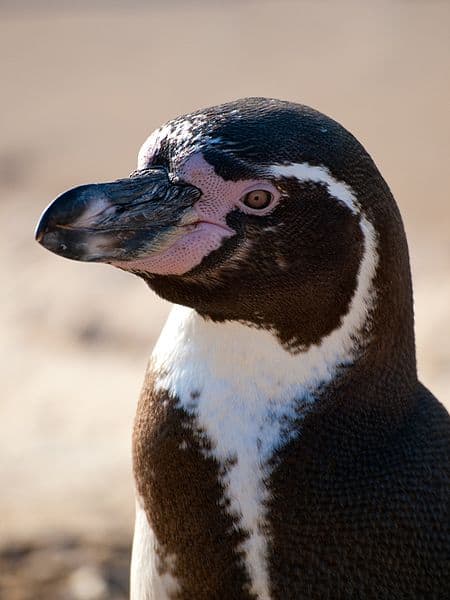
Many of us see penguins in zoos all over the world, others are lucky enough to see them in the wild. That's what one lucky London Zoo keeper got the chance to do in a TV documentary titled: Meet the Penguins. He's spent his career working with the Humboldt penguins yet never seen them in the wild, so he headed off to the wilds of Peru to catch a glimpse of the Penguins he'd spent his career working with roaming around their natural habitat. 

The problem of keeping penguins in enclosed areas, as the same with any animal, they become reliant on their keepers so it's about getting the balance between care and maintaining their natural instincts. One place where this was particularly evident was the fact that in London the keepers have to feed the penguin's chicks but in Peru they've developed their penguin colony so that the Penguins continue to feed their young and don't become reliant on their keepers. Surprisingly, penguins actually feed their young by regurgitating it into their mouths!  

However, these birds are endangered, unfortunately they can become drowned in storms, caught up in fisheries  or simply treated badly by people who want to keep penguins as pets. In fact where penguins live in protected areas like reserves they remain largely free from predators. On the most part, it's actually just the sea-lions which hold most threat for the penguins. 

Thankfully, these penguins have clever adaptions which help them to outwit their predators - for example they have flippers which are so hard they act like oars which help them to out swim the sea lions. They also have webbed feet like ducks which not only helps them paddle but also to balance when they're swimming. 

They then travelled to Lima, the capital of Peru - Peru's largest city sometimes called the City of Kings. They took the long journey across the rocky roads of Peru to a reserve, Punta San Juan. Punta San Juan is one of the richest marine environments on Earth. It's an amazing project which aims to deepen our knowledge of marine ecosystems and the previously unknown life of the Humboldt Penguin. Here, conservation is a number one priority, they even have a 3m high wall surrounding the reserve to make sure biodiversity is maintained. All around the reserve they also have boating restrictions to prevent damage through noise pollution and general disturbances. Even though these penguins have an unbelievable level of protection they still lead completely independent lives, For example they still leave the cliffs twice a day to look for food, on top of that they also breed in the isolation of caves at the back of the beaches or out of reach of their predators at the most extreme heights of the cliff. 

The humble Humboldt penguin leads an incredible life across the world and it's these amazing people like the ones at Punta San Juan that help to unlock the secrets to the penguin. 


Wednesday, 29 July 2015

RIP Cecil

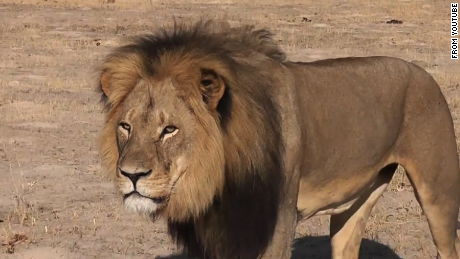
If you haven't already heard, Cecil, one of Zimbabwe's most famous lions was killed by a hunter on a hunting trip. Yesterday he paid £638 to be released on bail and is returning to court on 5th August. The hunter, a dentist from Minnesota is attempting to defend his case having carried out an unlawful hunt. Animal hunting is becoming an ever increasing problem as there are companies who hold both lawful and unlawful hunts on animals across the world and Africa, although one of the main issues with this is how do you put a price on these hunts - it's not just time and the materials but the cost of nature too. You also have to bring the characteristics of the animals into consideration. For example, Cecil was renowned for being friendly towards visitors which generated much needed tourism, particularly in a place where there's not a thriving economy. In Cecil's case he was partly driving tourism in Hwange National park - one of Zimbabwe's largest game reserves. Partly because he led two prides of lion's containing six lionesses and 12 cubs, Oxford University was studying him. The fact he was involved in scientific research also makes the problem far more complex because how can you price knowledge and further scientific developments which arise from that? The simple answer is, you cant.
What makes Cecil's death even worse is people hunt animals not just because of the 'pleasure' they get from the actual act of hunting they treat the animal that's died like a trophy - like a competition they've won. In fact, around 665 lions in Africa are killed every year for a "trophy". And sadly,Cecil's body was found skinned and beheaded according to the Zimbabwe Conservation Task Force (ZTCF). A representative from ZTCF said that Cecil never bothered anyone and a beautiful animal. Personally I think it's more about the circumstances he was killed - the killers tried to remove the GPS tag Oxford University had installed, he was treated badly after his death. And above all lions are worth so much, from tourism, to status. Whatever anyone thinks, Lions or any animal for that matter shouldn't be killed as a competition or should have a bad death or be treated badly after they've died.


#RIPCecil

Monday, 27 July 2015

The Long Winged Kite Spider

Before I start... 

SPIDER ALERT!!!


As this is the first in my series to find the weirdest animals on Earth, I thought I'd start small! I saw this spider on twitter and wanted to know more about him, so here goes! This is completely different to any spider I've seen in the UK and to be honest, I'm quite glad! It's normally found in forest regions in the tropics and subtropics, from Madagascar to Africa. Unlike many other species the male is a lot less colorful and is also smaller. The male also doesn't have the six sharp spines that the female does. You might also be glad to know that the venom isn't known to be dangerous to man!


Friday, 26 June 2015

Strawberries and Cream and all things SW19

It's that time of the year once more, where all the stars of the tennis world descend on SW19 for the biggest grass court tournament of the year. Andy Murray, the British Favorite will be bidding to win his third grand slam. Andy, well known for showing his emotions on court had to work hard to overcome his on-court frustration to start winning more and more matches - in particular, the high pressure grand slam finals.
Unfortunately, he lost in the 2012 Wimbledon Final to Roger Federer, some see this as his turning point. In numerous interviews he said that in a way he'd learnt to accept that he may never win a Grand Slam. This allowed him to relieve himself of the huge amount of pressure he faced - particularly in front of a home crowd. With the help of his then coach- Ivan Lendl, he started seeing a sports psychologist. In a way, this was venturing into uncharted territory seeing any kind of psychologist was seen as a sign of mental weakness. Sports psychologists help athletes optimise their performance, channeling any emotions into purely getting the job done, all with techniques like positive self-talk and also discussing any other issues Andy or any other athlete may be facing which could all impact on his performance.
However Andy does at Wimbledon he seems to have undergone a complete change since he got married in April this year, he's won all but one match - recently he's just won Queen's, got to the semis of the French Open, and won 2 clay court titles. However far he gets at Wimbledon, surely this should give him bags of confidence going into his first round match - against Kukushkin of Russia.
Elsewhere in Wimbledon this year we have - 
Aljaz Bedene vs Stepanek 
Liam Broady vs Matosevic (AUS)
James Ward vs Ferrer (ESP)
Kyle Edmund vs Dolgopolov (UKR)
Klein vs Seppi
Heather Watson vs Caroline Garcia (FR)
Laura Robson (her second competitive match after a 17 month injury break) vs Rodina
Jo Konta vs Sharapova
Naomi Broady vs Duque-Marino
Good luck to all the Brits playing at Wimbledon next week! :)


Monday, 8 June 2015

The Nervous System

Most people are very familiar with the term "nervous system", but why have we evolved to have one? The overall job of the nervous system is to coordinate what we're doing. In fact, unicellular (single celled) organisms are thought of as the basics of our cells - 'bags' of chemicals. Obviously, we're not single celled and we have more than 3.7x10^23 cells and our body has to coordinate every one of them and assign them specific jobs. And that's what the job of the nervous system falls to - along with the endocrine system it produces hormones which act as biological catalysts. This leads to every cell having a completely different job.
Scientists split up the nervous system into two parts, the central nervous system (CNS) and the peripheral nervous system (PNS). Through years and years of observations scientists were able to determine that the spinal cord branches out into nerves across the body which they later called the peripheral nervous system, and to differentiate the two parts, named the spinal cord and brain collectively as the central nervous system. 

Tuesday, 26 May 2015

Why do cats like boxes?

They're the YouTube classics which rack up potentially millions of views, cats sliding around the living room in boxes - but why do they have this obsession?
In the wild, cats hide in bushes or burrows during the day to escape their many predators. Scientists believe that it's this trait which lingers in domestic cats. Studies have indicated that cats in animal shelters feel far more comfortable if they had a box to hide in. Even when cats aren't stressed it still can make them feel more comfortable and secure.

Sunday, 17 May 2015

AS Physics - Electron Diffraction

(for AQA AS Physics)


  • Electron diffraction shows the wave nature of electrons (how electrons can behave like waves)
  • Diffraction patterns are observed when accelerated electrons in a vacuum tube interact with the spaces in a graphite crystal - this confirms electrons show wavelike properties
  • According to the wave theory - the spread of the lines in the diffraction pattern increases if the wavelength of the wave is greater
  • In experiments: a smaller accelerating voltage (the electrons are slower which gives widely spaced rings
  • Increase in the electron speed - the diffraction pattern circles squash together towards the middle. (fits with the de Broglie equation  - if velocity is higher the wavelength is shorter and the spread of the lines smaller)
Wavelength for electrons accelerated in a vacuum tube is about the same size as electromagnetic waves in the X-ray part of the spectrum

Friday, 1 May 2015

A level Physics: Wave Particle Duality


  • Light is part of the electromagnetic spectrum
  • The theory of the electromagnetic waves predicted the existence of waves beyond visible light (before we knew about x-rays and so on)
  • The discovery of x rays and radio waves confirmed their existence (and their predictions)
  • Many scientists in the late 19th Century thought that all aspects of physics could be explained through Newton's laws of motion. 
Interference and Diffraction show light as a wave
  • Light produces interference and diffraction patterns - these are alternating bands of dark and light
  • Can only be explained using waves interfering constructively or interfering destructively
Constructive Interference - when two waves overlap in phase
Destructive interference - when two waves are out of phase

Although - Particles DON'T show wave-like properties all the time

Diffraction only happens if a particle interacts with an object about the same size as the de Broglie wavelength

de Broglie came up with the wave-particle duality theory

shorter wavelength = less diffraction effects (this fact is used in electron microscopes)
Diffraction effects blur detail on an image 


(specifically for AQA A-level physics specification A)