Total Pageviews

Thursday, 16 June 2016

How do the nutrients in dead matter become available to leaves?


When something, whether its animals or plants dies, they are broken down by microorganisms (decomposers). These microorganisms are also called saprobionts. These secrete enzymes onto dead tissue, this is called extracellular digestion. They absorb products of digestion. Respiration by microorganisms produces carbon dioxide. Carbon dioxide is then taken into the leaves.

Wednesday, 15 June 2016

How can Global Warming effect crop yield?

Global warming is caused by an increase in carbon dioxide - so weirdly, global warming is kind of increasing our crop yields. This is because carbon dioxide is a limiting factor for photosynthesis, so if you increase the amount of carbon dioxide then you increase the amount of photosynthesis which can take place. More photosynthesis means a faster growth rate, more crops and a higher yield. 


What is the carbon cycle?

Carbon dioxide, or CO2 (excuse the missing subscript) is all around us, mainly in the air and water. Plants remove carbon dioxide from the atmosphere as they carry out photosynthesis. Once the carbon dioxide has entered the plant, it becomes carbon compounds within the plant tissues.

Plants are then eaten by animals (the primary consumers) - the carbon is passed on to those animals. It then gets passed on to each successive consumer. Of course, at some point, all of these organisms die - they leave behind carbon compounds in them. Microorganisms called decomposers then digest these carbon compounds. As they feed on dead organic matter, this is called saprobiontic nutrition.

The cycle continues as the carbon is returned to the air and water due to respiration. During respiration, carbon dioxide is released into the atmosphere.

There are times where carbon compounds end up where there's not decomposers - this might be deep oceans or bogs. This means that over millions of years, they are turned into fossil fuels by heat and pressure. When fossil fuels are burnt, the carbon is released - you might know this as combustion.


Wednesday, 1 June 2016

Movement of Blood around the Body | AS Level Biology Revision

Arteries:
AWAY from the Heart

to Arterioles


Veins:
BACK to the Heart

Link Arterioles to Veins - CAPILLARIES (tiny vessels)

Arterioles - small arteries
Control blood flow into the capillaries


Path (starting going AWAY from the heart)

  • Arteries
  • Arterioles
  • Capillaries
  • Veins
  • Heart 
Try this mnemonic to help remember the order:
Awesome Andy Cares Very Heroically 

Thursday, 12 May 2016

What is visual acuity?

Visual Acuity - The ability to tell apart points which is close together


This is a bit like the resolution of something, you talk about the resolution of an image or microscope. As far as a microscope, the resolution is the smallest distance at which two objects can be told apart.

In your eyes,  Rod cells give low visual acuity because many rods join to the same neurone which means light from two objects close together can't be told apart. In you eye, Rod cells are more sensitive, but cone cells (the other type of cells in your eyes) help you see more detail.


Wednesday, 11 May 2016

Why are rod cells so sensitive?


Check out my previous post on what photoreceptors are...


o effectively detect light, your eye has two types of photoreceptors, rod and cone cells. Rod cells are the most sensitive to light. They fire action potentials in dim light.


In your eye, many rod cells join one neurone. Essentially, this means that lots of weak signals can combine to reach the threshold and fire an action potential - in scientific terms: many weak generator potentials can combine to reach the threshold so an action potential is fired sooner.


This article specifically relates to AQA Biology Unit 5

Tuesday, 10 May 2016

What are photoreceptors?


Before you read this post, you might find it useful to check out my previous post on what a receptor is.


Photoreceptors are light receptors in your eye. Light enters through your pupil. Your eye cleverly adjusts the amount of light which enters the eye using the muscles of the iris.


The light rays are then focussed onto the retina (part of the eye which lines the inside of the eye). The retina contains photoreceptor cells which detect light - from here the light is pretty much turned into messages sent to your brain. One part of the retina - the fovea, contains lots of photoreceptors. Nerve impulses are sent from the photoreceptor cells to the brain via the optic nerve (a bundle of neurones).

Monday, 9 May 2016

Sickle Cell Anaemia


Sickle Cell Anaemia is a recessive genetic disorder, it's caused by a mutation in the haemoglobin gene. This causes an altered haemoglobin protein to be produced. This means the red blood cells become sickle shaped (concave) - not the typical shape you're probably aware of. The red blood cell's concave shape means they can't flow through capillaries easily like normal red blood cells can so the capillaries can become blocked - blood flow is then restricted. This can also bring up so many more issues like organ damage and periods of acute pain.

Some people can be carriers of the sickle cell gene, amazingly, carriers of the sickle cell gene are partially protected from malaria. Because of this advantageous effect, the frequency of the sickle cell gene have increased. Unfortunately this means the likelihood of inheriting two copies of the allele are increased - overall, this means sickle cell anaemia is more prevalent in these areas.
 

Thursday, 28 April 2016

AS Revision - DNA Replication

Mitosis: (used for growth and repair, including the growth of the foetus)


2 daughter cells produced
Identical to original (parent) cell and to each other, unless a mutation occurs.

Importance:
  • Increase in number of cells
  • 2 haploid cells fuse to make a diploid cell
  • Differentiation
  • Replacing cells (when they're damaged or die new cells must form to be genetically identical to function effectively)
Interphase: (cell not dividing, when replication of DNA occurs)
  • cell continues its normal function
  • prepares to divide
  • Cells DNA is unravelled and replicated - genetic content is doubled
  • Organelles replicated so there's spares
  • ATP content increased
Prophase:
  • Chromosomes condense (they get shorter and fatter)
  • Centrioles start moving towards opposite ends of the cell forming a network of protein fibres across it (forms the spindle)
  • Nuclear envelope breaks down
  • Chromosomes are free in the cytoplasm
Nuclear envelope: membrane around the nucleus
Centrioles: tiny bundles of protein

Metaphase:

  • Chromosomes (each have two chromatids) line up along the middle of the cell
  • become attached to the spindle via their centromere
Anaphase:

  • Centromeres divide
  • separating each pair of sister chromatids
  • spindle contracts
  • Pulls chromatids to opposite ends of the cell (first the centromere)
Telophase:
  • Chromatids reach opposite poles on the spindle
  • uncoil and become long and thin again
  • They're now called chromosomes again
  • Nuclear envelope forms around each group of chromosomes so there are now 2 nuclei
  • Cytoplasm divides
  • FORMING: 2 daughter cells genetically identical to the original cell and to each other
Mitosis is now finished and each daughter cell starts interphase and the whole cycle repeats.

Mitotic index = the number of cells carrying out mitosis (visible chromosomes)/ total number of cells on the slide

Cancer:
(result of uncontrolled cell division)

  • cell growth and cell division controlled by genes
  • cancer is a tumour that invades surrounding tissue
  • cells keep on dividing to make more tissue (the tumourr)
Chemotherapy:
  • prevent the synthesis of enzymes needed for DNA replication
  • Not specific- can kill normal cells, steps taken to reduce the impact on normal cells
  • A large portion of the tumor is removed using surgery
  • Repeated treatments (ie not one big dose), treatment breaks in between. 

G1- cell growth and protein production


specifically for AQA Biology AS Unit 2

Wednesday, 20 April 2016

What is a synapse?


When electrical impulses are fired around your body, they do so by travelling around in neurones as chemical/electrical impulses.


However, your neurones don't cover every inch of your body. To get over this issue, there are small gaps between the neurones - this is called the synapse. Technically speaking, it's a junction between the neurone and the next cell. , the gap itself is called the synaptic cleft. The neurone before the gap is given the name of a presynaptic neurone - it has a swelling on it called the synaptic knob. On the presynaptic neurone there's synaptic vesicles filled with chemicals called neurotransmitters.


When an action potential reaches the end of the neurone, neurotransmitters are released into the synaptic cleft. They diffuse across this gap and attach to the postsynaptic membrane - here they bind to specific receptors. When the neurotransmitter binds to the receptors, this could trigger an action potential, causing muscle contraction (perhaps) in the next cell. Alternatively, a hormone could be secreted if it's a gland cell.


Because these receptors are only on the post synaptic membrane, this makes action potentials unidirectional - i.e they travel in only one direction. If nerve signals travelled in multiple directions, things would get very confusing very quickly!

Monday, 18 April 2016

What are genetic mutations?


Mutations happen all the time - most are absolutely harmless, some are harmful - but what are mutations?


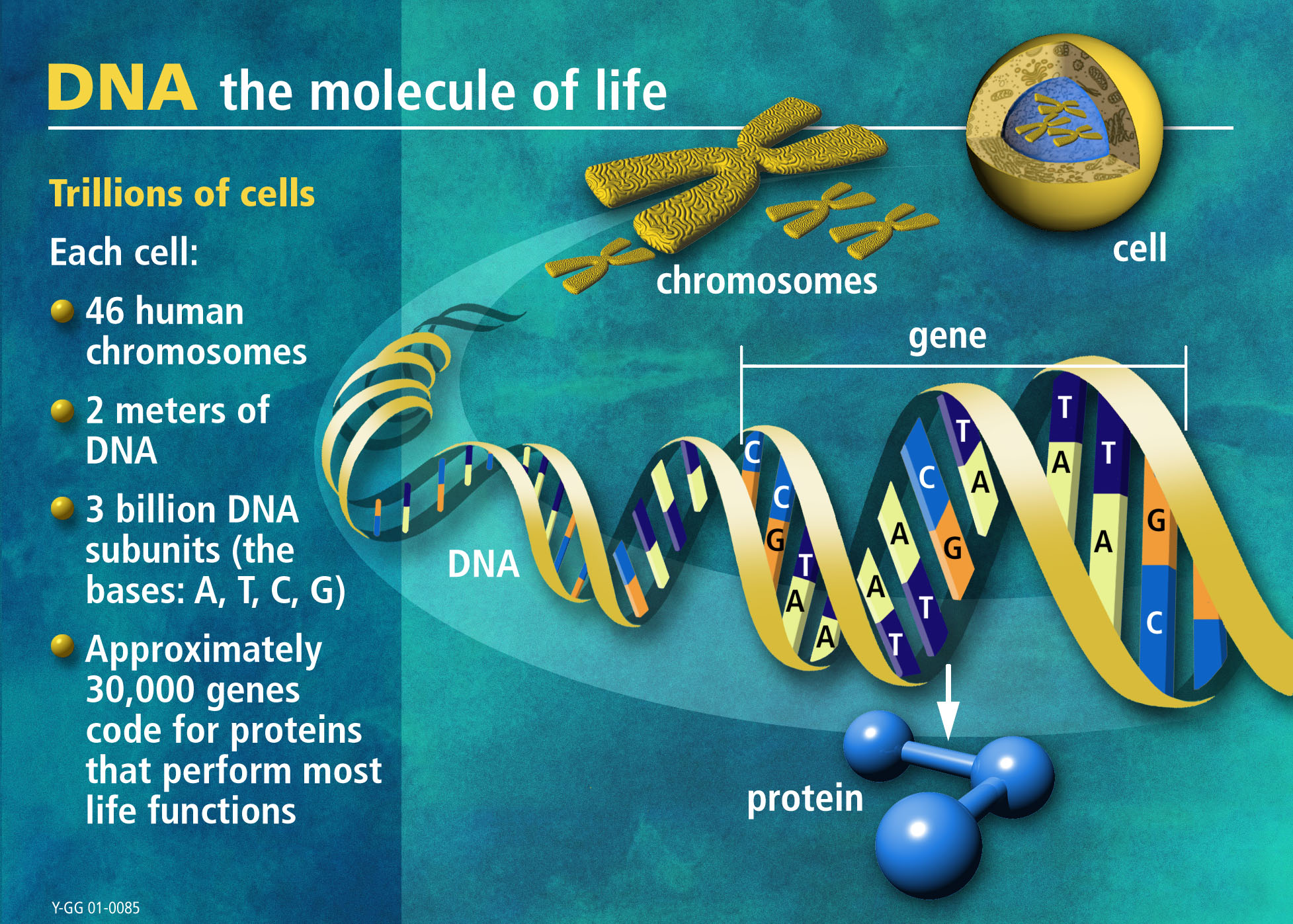
A mutation is a change, deletion or addition of a base in a DNA code. Your DNA is a long 'string' if you like of complementary bases - these code for amino acids and in turn, these code for proteins. If one of the bases are substituted this doesn't always lead to a change in amino acid formed. This is because your DNA is degenerate. This means that more than one combination of three bases code for one amino acid.


A deletion of a base will change the amino acid coded for. This is because it causes a 'frame shift' - this moves all the bases up in the sequence - different amino acids are coded for. This in turn, affects the hydrogen bonding between the complementary base pairs. Because the hydrogen bonds are altered - this affects the tertiary structure. This means the protein produced isn't functional.


The real issues occur if mutations occur within the genes which control cell division - these are called, the "tumour suppressor genes" and the "proto-oncogenes". If mutations occur within the proto-oncogenes, then cell division is stimulated. It is uncontrolled cell division which leads to the formation of tumours and potentially cancers.


Saturday, 16 April 2016

What is tRNA? | A- Level Revision

  • tRNA is a type of RNA
  • single polynucleotide strand
  • folded into a clover shape
  • hydrogen bonds between specific base pairs hold the molecule in space
At one end:
  • specific sequence of 3 bases called an anticodon
At the other end:
  • amino acid binding site (complementary base pairings)
Function:


  • tRNA found in the cytoplasm
  • involved in translation
  • carries the amino acids (used to make proteins) to the ribosomes


Thursday, 14 April 2016

Panda Genetic Fingerprinting


Using Genetic Fingerprinting to save the Panda might seem like a crazy idea but it's an idea that might have legs! The giant panda is one of the rarest animals in the world and is considered to be on the brink of extinction. Giant pandas have been kept and bred in zoos for many years now. In many areas, Panda's are on breeding programmes so they could, one day, be released into the wild.


Unfortunately, zoo life doesn't come worry free. There's the issue that with small populations, genetic variation is reduced. This basically means they could well struggle when they're released into the wild. Having said that, Pandas find it difficult to reproduce in captivity.


Scientists can only guarantee that a female will get pregnant through pretty much carrying out Panda IVF. When they do so, they use sperm from several males. One problem with this is that, who's the father? Identifying who the father is can then help the scientists to identify how genetically different pandas are.

Their method of obtaining DNA samples is strange, to say the least!! They collect around
10 Panda faeces can be collected from the wild. The faeces contain DNA from the panda, from the bamboo on which they feed and from bacteria. The DNA is then put through the 
polymerase chain reaction (PCR). The primers used attach only to the panda DNA because of complementary base pairings.

The DNA from this, then goes through genetic fingerprinting. This is where the genetic sequences are read (ie GATC etc etc). Collating an idea of what happens in the wild, pandas can then be individually identified.

How this happens, is quite a complex scientific process. DNA is first cut using a restriction enzyme. This cuts the DNA at specific points. Gel Electrophoresis then separates the strands according to length (so mass as well). A process called Southern blotting then makes the strands single stranded. A DNA probe (which is complementary to part of the DNA strand) is then added. The probe will act as some kind of marker - it could be radioactively marked or fluorescent.


Wednesday, 13 April 2016

Antibiotics | Biology A-Level Revision


  • In normal cells water enters by osmosis - too much water, the cells burst (osmotic lysis)
  • Bacterial cells have a tough cell wall which prevents the cell from expanding
  • Antibiotics stop the bacterial cell wall from forming correctly so the wall is weaker. 
  • This weakened cell wall means that the cell can burst due to osmotic lysis so the bacteria doesn't spread
Although there's a new problem, antibiotic resistance:
  • Shortly after antibiotics were discovered, small groups of people were developing resistance due to a chance mutation. 
  • The mutation caused the production of a new enzyme which broke down the penicillin. 
  • The gene that coded for this mutation then is passed to the next generation (through vertical gene transmission) 
  • The antibiotic resistance gene carries plasmids so it can pass onto other bacterial species via horizontal gene transmission. 
Why do bacteria need to adapt?
Similarly to what Darwin said, only the fittest survive, so to increase their chances of survival, they need to adjust to suit their environment. What this does mean however is that antibiotics can quickly become useless as the bacteria adapt to become resistant to them.

Conjugation

  1. A donor cell produces a thin conjugation tube between its cell and the recipient cell. 
  2. The donor cell replicates its plasmids
  3. The plasmid is unwound so it's now straight and can fit through the conjugation tube
  4. The replicated plasmid moves through the conjugation tube and enters the recipient cell
  5. The plasmid which has just entered the recipient cell now returns to a circular shape
  6. The bacteria has now replicated. 


Key terms:
  1. Mutations: A random change in the quantity or structure of DNA (one base is added,deleted or replaced)
  2. Conjugation: The fastest method of evolution where DNA of existing individuals is combined - horizontal gene transmission
  3. Plasmids: A circular piece of DNA
Vertical Gene Transmission - DNA passed to the next generation of the SAME species
Horizontal Gene Transmission - DNA passed to different species via CONJUGATION

What is cholesterol?


We always hear about cholesterol - pretty much why too much of it's bad, and they're not wrong. There are two types of cholesterol, both good and bad. It's a soft and waxy material found in the membranes of cells. From here, it's transported into your blood stream. Partly, this is a substance produced by your body and partly absorbed from animal products you eat, this includes eggs, meat and dairy products.

The bad cholesterol is obviously the stuff we should try and limit, this is because it can clog blood vessels. The issue here, is that it increases your risk of heart attacks and strokes. Good cholesterol however removes the bad cholesterol. It takes it to the liver to be destroyed. This means that if you've got a lot of good cholesterol in your system, it actually works to protect your body from heart disease.

Friday, 8 April 2016

What are mutagenic agents?

Mutations are spontaneous errors where DNA is misread during replication. There are some things which can increase the rate of mutations. These include UV, ionising (high energy) radiation, some chemicals such as benzene and some viruses are all examples of mutagenic agents. They work by

acting as a base. Chemicals called base analogs can then act as a substitute for a base during DNA replication.


Monday, 4 April 2016

Maria Sharapova - The Debate


There's a whole number of ways someone can flip Maria's failed drugs test. For pretty much her entire career, she's been at the centre of tennis. She's won five grand slams and an Olympic silver medal at London 2012. She's 28.


If you take Sharapova's statements literally, then it was an honest mistake - stupid at least. From what she said at last Monday's press conference, she says she received the list as an email attachment from Wada. She says she didn't open up the email. There are so many ways you can look at this, how much trust do you place in your doctors? This is where sports psychology comes in - does this place unnecessary stress onto someone who has to perform day in, day out?


Having said that, if you look more closely at what this drug actually is, it appears as though it's one which you only take for about 2 weeks at a time - why was she taking it for 10 years?


Legally speaking, this now falls to the ITF, WADA and her team to investigate what happened and the circumstances leading up to this. She'll be given a suspension (pretty much for certain), it just falls to this investigation process to determine whether she deliberately took the drug knowing it was banned or took it without knowing it was banned which would class as negligence. According to WADA it was added to the banned list because of "evidence of its use by athletes with the intention of enhancing performance".


Whatever you believe, we'll doubtless hear the truth eventually!


Wednesday, 30 March 2016

Marmosets | Animal Profile


Marmosets, are very small, but very cute monkeys. They're only around 22cm long, there's about 22 subspecies of them.

Compared to other monkeys, they show some very different features, they have claws rather than fingernails and strong hairs on their wrists. Unlike us, they don't have any wisdom teeth. 

Their body temperature is unbelievably variable, changing by up to 4 °C in a day. Marmosets are native to South America and have been found in Bolivia, Brazil, Colombia, Ecuador, Paraguay and Peru although they've been spotted in Central America and Mexico. Unfortunately, they have also been raised as pets.

Saturday, 26 March 2016

ANIMAL A-Z: OUT NOW!!!!

My new book, an A-Z guide to some of the hidden gems of the Animal Kingdom is OUT! Check out the links below:


Friday, 25 March 2016

MY NEW BOOK! ANIMAL A-Z!!

My new book, an A-Z guide to the Animal Kingdom will be released in the next couple of days on Amazon and Amazon Kindle. The book contains a huge range of animals, from the weird to the wonderful and everything in between. Below is a selection of animals from the book:

  • The Aye-Aye
  • Antelope
  • American Alligator
  • The Tarsier
  • Porpoise
  • Seals
  • Puffins
  • Tasmanian Devil
  • The Quagga
  • Tigers
  • Lions
  • Sea Lions
  • Clownfish
  • The Yellow Billed Hornbill
  • The Uakaris

There's this and a whole lot more in my book! When it's released, I'll add a link here so you can check it out :)