Total Pageviews
Friday, 5 December 2014
Thursday, 4 December 2014
Who was Napoléon Bonaparte? #SciSparksAdvent Day 4
(1769-1821)
The word about science began spreading everywhere in the 1700s - although slowly because there wasn't the Internet or TV! He strongly encouraged the development of science in France. He started this when he invaded Egypt in 1798 where he was accompanied by a party of scientific savants. He proclaimed himself emperor in 1804. He was a strong supporter of the new metric system (metres and centimetres etc) even though before he personally refused to use it!
Wednesday, 3 December 2014
Organ's don't grow on trees.... #SciSparksAdvent Day 3
Well they don’t grow on trees but in the near future you may
well be seeing stem cells grow a whole range of organs. Perhaps stem cells are
known mostly for their ability to grow into any type of cell. This development
although it’s comparatively new is pushing the boundaries of what’s possible;
we’ve even managed to grow a new heart entirely from stem cells.
Between April 2013 and March 2014 nearly 5,000 people had
organ transplants. Although one major problem we have is that sometimes the
person’s own immune system detects that the organ is a foreign object and
rejects it. The hope is that if the organ is made from your own cells the success
rate will be much higher.
Currently around 120,000 people are waiting for an organ
transplant - stem cell organs could mean organs would be available in days
rather than potentially years. To grow a new heart (or any other organ), it all
starts off with a donor organ that doesn’t necessarily have to come from a
human. They then remove all the cells, this leaves the scientists with a
protein scaffolding which is then repopulated with the patient’s own stem
cells.
| This image shows a new heart being grown in a lab |
Labels:
#SciSparksAdvent,
2014,
advent,
cells,
day 3,
new,
organs,
stem,
transplant
Tuesday, 2 December 2014
A new hand... #SciSparksAdvent Day 2
Scientists have developed a chip which may help those affected by brain and spinal cord injuries regain movement. A paralysed man in America has been able to move his hand and fingers for the first time in 4 years after this incredible treatment. A team at Ohio State University implanted a very small chip into the motor cortex of his brain. The chip interprets brain signals that are processed by a computer and sent to an electrode, this stimulates the muscles relevant for the desired movement.
#SciSparksAdvent Day 2
My Advent Calendar - Day One "Wearing your heart on your sleeve"
Due to technical issues I've had to postpone the start of December until today but still - here's day 1 of my advent calendar! Every day in December I'll be posting something from a short did you know fact to a full blog post.
Day One #SciSparksAdvent
Sometimes, us as humans can't read emotions particularly well. Scientists think help is now on the way! A team at Daejon in South Korea have developed a sensor that can be built into clothing, it detects fluctuations in electrical capacitance - the idea being that it changes the size of the goose bumps triggered by the wearers emotions. Scientists hope that that the material may eventually be used to monitor the wearers emotional states
Monday, 27 October 2014
Why do we remember criticism more than praise?
This is what psychologists call the 'negativity bias', they think we've evolved this to keep us away from harm. Basically, we're more likely to remember scary of painful events more than happy ones - remember unkind events more than kind ones, process bad news more thoroughly than good. As for self-perception we're highly motivated to avoid a bad image so react with stronger emotions to criticism more than to praise. On the other hand we can overcome this negativity bias by over-estimating their own positive qualities.
Saturday, 18 October 2014
Winning a Paralympic Medal | Oscar Pistorius Trial October 2014
It takes a lot to win a Paralympic medal - someone who's severely disabled gets chucked well and truly onto the biggest stage disabled sport gets. London was unique in the fact we kind of ignored the fact these were disabled people and treated them more like "superhumans" - once more Oscar not only competed at the Paralympics, but the Olympics too making history.
The Paralympians push the boundaries of science - they use revolutionary technology, all in an effort to improve their performance for the biggest stage, the Paralympics.
On Valentine's Day 2013, Paralympic star Oscar Pistorius was thrown into one of the biggest, most public legal battles South Africa has seen. People can judge all they like, make whatever assumptions as to what really happened - but above all we might not ever know what really happened. But whatever your view there are no winners or losers in Oscar's trial. Oscar was poster boy of the Olympics and Paralympics, he's since lost all of that - he's lost sponsorships and literally all his money - he's not only broke but also broken. The Judge has to decide whether Oscar is better in jail or more use to society out of jail, facing a long community service sentence and house arrest. But on the other side Reeva's parents have lost their daughter - accident or not, it's still a human life, and a price should be paid. Although what that price is, is up to the Judge. We're so judgemental that whatever you think, we shouldn't forget the history Oscar made in 2012 - it's easy to judge we're not there not even remotely involved in the trial, I just hope that the judge makes the right decision on Tuesday, whatever that decision is.

The Paralympians push the boundaries of science - they use revolutionary technology, all in an effort to improve their performance for the biggest stage, the Paralympics.
On Valentine's Day 2013, Paralympic star Oscar Pistorius was thrown into one of the biggest, most public legal battles South Africa has seen. People can judge all they like, make whatever assumptions as to what really happened - but above all we might not ever know what really happened. But whatever your view there are no winners or losers in Oscar's trial. Oscar was poster boy of the Olympics and Paralympics, he's since lost all of that - he's lost sponsorships and literally all his money - he's not only broke but also broken. The Judge has to decide whether Oscar is better in jail or more use to society out of jail, facing a long community service sentence and house arrest. But on the other side Reeva's parents have lost their daughter - accident or not, it's still a human life, and a price should be paid. Although what that price is, is up to the Judge. We're so judgemental that whatever you think, we shouldn't forget the history Oscar made in 2012 - it's easy to judge we're not there not even remotely involved in the trial, I just hope that the judge makes the right decision on Tuesday, whatever that decision is.
Monday, 29 September 2014
The Cell Theory
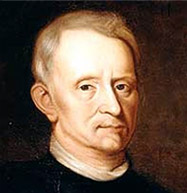
| Robert Hooke (1635-1703) |
The cell theory is the scientific theory that describes the properties of cells. Cells are the basic unit of structure in all organisms - they're also the basic unit of reproduction. Over the last few centuries, there's been continual improvements made to microscopes all the time. This has allowed us to look deep into the structure of the cell. Much of this is attributed to Robert Hooke who began the study of cells (cell biology). There's been many debates over the years about cells but now they're considered the fundamental unit of life. This discussion and research led to the Cell Theory being eventually formulated in 1838, which was credited to Matthias Schleiden and Theodor Schwann. But many other scientists like Rudolf Virchow contributed too.
The Cell Theory is widely accepted to be the foundation of biology and explains the function of the cells.
The main principles of the cell theory are described as:
- All living organisms are composed of at least one cell
- The cell is the most basic form of life
- All cells come from pre-existing cells
Friday, 26 September 2014
What is scoliosis? - UPDATED
3 years ago today (26th September 2014) I had an operation to straighten my spine. Before the operation it measured around 65 degrees. With the addition of 2 rods and twenty something screws - it's gone down to a staggering 13 degrees!
But what is scoliosis? How do you get it? The answer to that is that most of the time no-one knows, this called idiopathic scoliosis. Most often, scoliosis is found either really early on in your childhood or mid-way through your adolescence - mostly after a growth spurt. If the curve is under 20 degrees then you'll probably be monitored. Although if your curve increases beyond 20 degrees then a brace may well be recommended. But a curve beyond 40 degrees an operation might be recommended.
Now my spine has been fused almost all the way down - I can't feel the metal at all, it's just airport security that poses a bit of a problem!! :) All in all, it was one of the best things I've ever done and I'd recommend it to anyone considering having it done!
For more information check out the Scoliosis Association UK for more information and Patient Leaflets - www.sauk.org.uk
Update 27th October 2014 - today I had my last ever appointment at Addenbrookes at 11:30, where I was discharged forever! We then went into Cambridge to celebrate! Below are the X-rays from today!!
But what is scoliosis? How do you get it? The answer to that is that most of the time no-one knows, this called idiopathic scoliosis. Most often, scoliosis is found either really early on in your childhood or mid-way through your adolescence - mostly after a growth spurt. If the curve is under 20 degrees then you'll probably be monitored. Although if your curve increases beyond 20 degrees then a brace may well be recommended. But a curve beyond 40 degrees an operation might be recommended.
Now my spine has been fused almost all the way down - I can't feel the metal at all, it's just airport security that poses a bit of a problem!! :) All in all, it was one of the best things I've ever done and I'd recommend it to anyone considering having it done!
For more information check out the Scoliosis Association UK for more information and Patient Leaflets - www.sauk.org.uk
Update 27th October 2014 - today I had my last ever appointment at Addenbrookes at 11:30, where I was discharged forever! We then went into Cambridge to celebrate! Below are the X-rays from today!!
My eBook is FREE today only - http://www.amazon.co.uk/gp/product/B00LHOXRO4?*Version*=1&*entries*=0
Please download it and leave feedback!!
Subscribe to:
Posts (Atom)