Total Pageviews

Showing posts with label #SciSparksAdvent. Show all posts

Thursday, 24 December 2015

Tim Peake's Christmas Card | #SciSparksAdvent

Happy Christmas Eve! As we're only one sleep away from the big day - I thought I'd share Tim Peake's Christmas card this year!

As Tim said on Twitter, this is a Christmas card he never thought he'd send!  Having said that I reckon he needs to improve his space somersault skills! :)


Wednesday, 23 December 2015

Christmas Day Full Moon! | #SciSparksAdvent


December's full moon is called the Full Cold Moon because it occurs at the start of winter and it will peak at 06.11 EST (23.11GMT Christmas Eve). Nasa released this image of how the moon will appear on Christmas Day. The last time a full moon dawned on Christmas was in 1977, and it won't happen again until 2034

There's going to be a full moon on Christmas day - one of the brightest full moons. The last time this happened on Christmas day was 1977. 

Stargazers will be given a rare treat this Christmas day as the final full moon of the year peaks on 25 December.
The last time a full moon dawned in the skies on Christmas was in 1977, and the event won't happen again until 2034. 
December's full moon is called the Full Cold Moon because it occurs during the beginning of winter and it will peak at 06.11 EST (23.11 GMT Christmas Eve). 


See more 
http://www.dailymail.co.uk/sciencetech/article-3371709/Rare-Cold-Moon-brighten-sky-Christmas-day-Lunar-event-38-years-won-t-happen-2034.html

Saturday, 19 December 2015

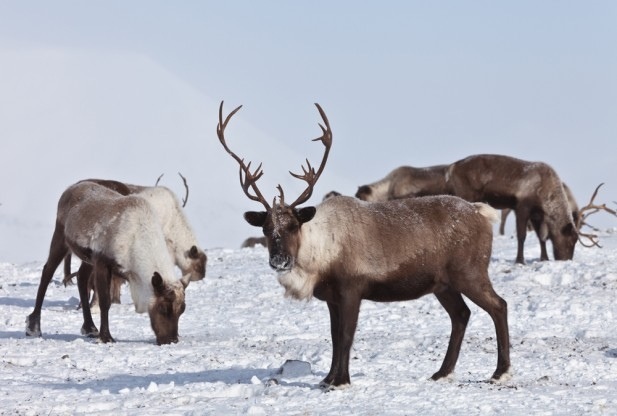
Reindeers | #SciSparksAdvent

For obvious reasons - reindeers are mostly known for their link to Santa Claus and make the ideal sleigh pullers. Aside from Christmas, they're more usually seen during their mammoth Arctic migration -  during this, North American herds may travel for more than 5,000km.
Reindeers are also the only kind of deer where both males and females sport antlers, although they still can reach epic proportions in male reindeers.


Throughout the year, Reindeer mostly eat grass but they also take a fancy to virtually any other plant. In the winter - they often eat 'Reindeer lichen', moss and fungi. They are also very sociable creatures, living in groups of 10-100 groups.


As far as breeding is concerned, they mate in October and have a pregnancy of 230 days and give birth in May or June. When they do so, they only give birth to one baby who becomes fully mature at 2 years old. In the wild, they live to between 12 and 15 years old, although some live until they're 20.
Like many animals, they're hunted and have been hunted since the stone age. In northern regions in particular, they eat the meat and use the fur, skin, antlers and bones for various products. The reindeer was first domesticated around 3,000 years ago in Siberia and Scandinavia. Since then, they've been used for transport and pulling sleds. Because they can live in very cold climates - this makes them the ideal animals for the job.  


Friday, 18 December 2015

How much does Santa's Sleigh weigh? | #SciSparksAdvent

7 days to go!


If we're trying to work out how much his sleigh actually weighs, you need to make a lot of assumptions. Lets say that every child on Earth receives Buzz Lightyears - these have a boxed weight of 1.2kg - in total that's 840,000 tonnes of toys. These require a staggering 5.6 million reindeer to pull. Each reindeer weighs around 600lb - so the whole procession has a mass of 2,363,310.33 tonnes - Santa needs a few more than 7 reindeer!


Thursday, 17 December 2015

Throwback Thursday - 2014 Christmas Lectures | #SciSparksAdvent

As the Royal Institution Christmas Lectures are coming up, I thought you might like to be reminded of the Christmas Lectures last year, so here's the first episode from last year's lectures.


Wednesday, 16 December 2015

What will Tim Peake's expedition do for UK science? | #SciSparksAdvent

Personally for Tim, he'll be able to carry out experiments which could lead to revolutionary developments. He's also acting as a guinea pig - allowing people back on Earth to monitor how his body is adapting or changing as a result of the zero gravity. During his 6 month voyage, his bones will get weaker  - he has to do 2 hours of exercise a day to combat this. When he returns it will take around a year for his body to completely get over the effects of being in zero gravity. He'll also be able to pass on his experiences - even just the view. Understandably many astronauts who have previously flown in space say that's the one thing which truly changes you - seeing it with your own eyes, and when you return you can truly appreciate it. This, apparently is known as the overview effect. It's also pioneering in the sense that no British person has done what Tim's doing. He's the first British astronaut to be spending a term on board the ISS. Other British astronauts have flown in space - Helen Sharman became the first British Citizen to travel in space when she visited the Soviet space station Mir in 1991. Others have flown either as private individuals or by taking up US citizenship.

School children across the UK can finally relate to someone on board the ISS - someone with a British accent - coming from a town near them. Follow him on Twitter @astro_timpeake where he'll hopefully be posting updates from the ISS. Whilst he's on board he's got lots of exciting plans - including opportunities for school children to link up with him on the ISS. This is the first time he's been on the ISS and no doubt he'll make the most of it.

Good luck Tim!


Wednesday, 9 December 2015

What slows your Wi-Fi? | #SciSparksAdvent

Research has shown that there might be more to a slow internet connection than first meets the eye. Check out this article for more information -
"Christmas lights may be crippling your WiFi, or at least that was the takeaway from headlines circulating earlier this week.
The claim isn’t simply fodder for the #WarOnChristmas debate. It’s based on some basic principles of physics.
But how bad is the problem and should you toss those twinkle lights in the trash so you can stream Love Actually without interruption? The answer depends on where your WiFi router is in relationship to the holiday lights and the size of those sparkling strands.
WiFi uses radio waves to communicate. Radio waves fall into a family of radiant energy known as the electromagnetic spectrum. Microwaves, infrared beams, visible light, ultraviolet rays and gamma rays are all part of this family. Like relatives arguing at the holiday dinner table, sometimes these waves interfere with each other.
The biggest pest for WiFi tends to be microwaves. If you stick your router next to a microwave oven and warm up a bowl a soup, you might notice a few connectivity issues. That’s because high-powered microwaves often operate at a frequency — 2.4GHz — used by most WiFi devices. Switch on the microwave, and your laptop can no longer distinguish between the WiFi signals and energy being produced by heating your Hot Pocket. Cell phones, bluetooth gadgets, some baby monitors, and cordless phones (remember those?) can create the same problem and interfere with your download speed.
Back to holiday lights. Their incandescent and LED bulbs emit light. Also, their wires are typically unshielded, meaning the electromagnetic radiation created by electricity pulsing through the cord can produce a very weak electromagnetic field.
More lights may mean a stronger field, thanks to a physical concept called linear superposition. Light waves, like all forms of electromagnetic radiation, moves in waves like water."
From -
http://www.pbs.org/newshour/rundown/war-on-christmas-lights-wifi-interference/

Tuesday, 8 December 2015

The Changing Arctic | #SciSparksAdvent


The Arctic is warming twice as fast as the Earth as a whole. The Arctic is vast - it spans about 11 square kilometres, yet around 4 million people live there. The harsh environment brings extreme conditions, winter darkness and very brief summers. The issue of climate change is one that's still being debated but one thing's for sure, climate change in the Arctic is real. Mathematical models produced show that in 100 years we could be looking at an Arctic, 3-6C higher than today. The spring snow thaw is now happening earlier, on top of warmer winters it's putting many species' lives at risk. As far as soils are concerned, the Arctic has a complete range - from rocky mineral soils and mountain areas to polar deserts. 22% of the Northern hemisphere has permafrost (snow that doesn't thaw throughout the year), the Arctic has most of the permafrost. In some locations the permafrost is 3 million years old and even about 1.5km thick. However because of climate change some of this permafrost is melting - along with its 3 million year history. Towards the south throughout much of the tundra (ecosystems where tree growth is limited because of low temperatures) when the permafrost thaws, surface ponds drain away. Although this doesn't sound like much of an issue, the ponds host billions of species such as insect larvae, migratory birds and the predators that feed on them. Having said that, in other areas, further North, the permafrost thaw can lead to the formation of new ponds - this of course increases the biodiversity. We can also learn more about the organisms that lived long ago, how they coped with climate change and we can learn more about our natural world. Above all, the Arctic is facing a new challenge - global warming and if we continue to lower our carbon dioxide emissions and work towards reducing climate change, it's not too late.

Monday, 7 December 2015

I'm a Celebrity... Get me out of Here!!!! | #SciSparksAdvent


Last night, I'm a Celebrity crowned it's new Queen of the Jungle, Vicky Pattison - the show was a lively one but once again, it's come under fire this series for how animals are treated. Some animal charities (like Peta- People for the Ethical Treatment of Animals) have raised concerns about the use of live animals during trials. This was particularly the case during Ferne McCann's trial where she ate a number of things including a live spider. The show also saw live crickets, cockroaches and snakes used. It's not just animal charities who are worried, the watching public was too, so much so, Ofcom received 553 complaints last night alone. So - do you think animals aren't treated like they should be in these shows? ITV does say that they comply with all the necessary regulations, do we treat the "cute and cuddly" animals better than the others? Have your say in the comments below.

Sunday, 6 December 2015

Follow me on Twitter!! | #SciSparksAdvent

Keep updated with everything that's happening by following me on Twitter @Sci_Sparks!


Saturday, 5 December 2015

The Smell of Pine | #SciSparksAdvent


By now you might be thinking of putting up your Christmas tree, if you've ever wondered what fills your house with that amazing pine smell - here's that chemical.

Image taken from Compound Interest

Friday, 4 December 2015

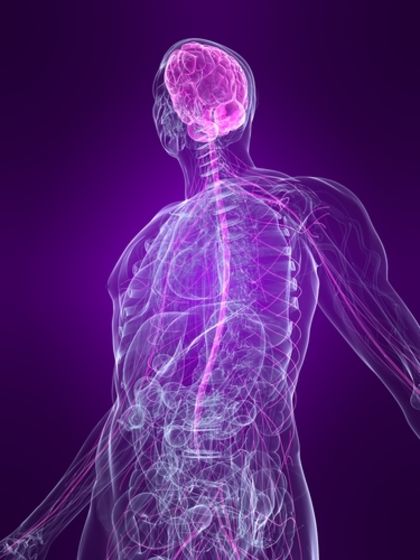
What is our nervous system? | #SciSparksAdvent


Without our Nervous System, our life would be very, very different. For a start, we simply wouldn’t be able to feel pain. Take a candle for example, if we couldn’t feel pain then we would just leave our hand far too close to the flame but because we do have a very advanced Nervous System we’re able to take our hand away as quickly as possible without becoming too burnt!

Your body is home to a network of neurones and passages which send messages all over your body – all to keep you out of harm’s way. Your nervous system is one huge evolutionary product – the first nervous tissue actually came about in wormlike organisms 550 to 600 million years ago.

Your nervous system is made up of two components - the CNS (Central Nervous System) and the PNS (Peripheral Nervous System).

The CNS – This contains the brain and spinal cord. Most of your central nervous system is enclosed within your body that is apart from something called the “olfactory epithelium”. It’s a specialised area of tissue inside the nasal cavity involved in smell. Scientists say that because it is exposed this might be a potential avenue for further treatments relating to your CNS.

The PNS – This mainly consists of nerves, pairs of nerves that originate from the brain, enclosed in bundles of long fibres. It connects the CNS to every other part of the body.

Surprisingly your nervous system controls your heart rate. The job of which is done by chemoreceptors. These are found in the walls of your carotid arteries. They detect changes in pH as a result of a change in CO2 concentration. When your blood CO2 concentration is too low, your chemoreceptors detect a pH drop. They then send impulses to the section of the medulla oblongata ( a region of the brain) responsible for increasing heart rate. This section of the brain then sends impulses to a node in your heart. Your heart rate is now faster and the pH can return to normal.
Christmas Countdown: 21 sleeps to go!

Thursday, 3 December 2015

Bank Card Readers | #SciSparksAdvent


By now, you've probably started thinking about your Christmas shopping and you might pay for a lot of it on a debit or credit card, but how do those card readers actually work? Well, when you insert your card, the machine works to read the information along the magnetic strip, the machines also make electrical contact with the embedded chip on the card - the users pin is then encrypted, once you've typed in the correct pin, the payment is authorized!

Happy shopping!


Tuesday, 1 December 2015

It's December! | #SciSparksAdvent

It's finally December, time to crack open the first door on your advent calendar as there's only 25 days to go until the big day!


Every day until the 25th December I'll be posting every day on Christmas science, to the highlights of the year, keep updated by following me on Twitter @Sci_Sparks and keep your eye out for new posts here!


To get into the Christmas spirit I thought I'd start off by looking at Santa - question is, what would happen if he ate all those sweets?


He'd actually have late onset diabetes by the time he was three hours into his night shift! If you assume every household the world over leaves two chocolate chip cookies, he'd be consuming 170 calories, 8g of fat and 14g of sugar in every household. This means he consumes 374 billion calories, 33,000 tonnes of sugar and 151,000 tonnes of fat - enough to keep him going for the new year!!! Still, who said chocolate chip cookies weren't delicious?? :)


Thursday, 26 November 2015

#SciSparksAdvent 2015

Join me here for a new post every day, on everything from Christmas science to the things you've always wanted to know, in December as we count down to Christmas! 

Makes sure you're also following me on Twitter (@Sci_Sparks) and Facebook, Science-Sparks for the latest updates!


Happy Christmas!!

Thursday, 25 December 2014

Happy Christmas! #SciSparksAdvent Day 25

Here's the last installment of my advent calendar for this year, I hope you are all having an amazing Christmas, while you are all tucking into your Christmas dinner here's some of the science behind Rudolph the Red nosed Reindeer.

Not just a song: A reindeer in the Norwegian Arctic showing distinct pink colouration on its nose
How did Rudolph the Red-Nosed Reindeer get his red nose?
In 1939 an illustrator and author of children's books Robert May created the character of Rudolph (sorry kids!!) which  became an instant hit, in the decades to come Rudolph had a song, TV special, all of which cemented him in Christmas tradition. Although it's not all TV, Reindeer's do in fact have red noses!
To many people's surprise this has actually been researched and the results have actually been published in a science journal. There are  many reasons why this is the case, one of which being that they have densely packed blood vessels in their nose near the skin's surface. This in fact, is what scientists call "nasal microcirculation". Every Christmas Eve Rudolph pulls Santa's sleigh through every climate - so this kind of circulation is essential for all kinds of extreme temperatures. The tiny blood cells which are known as micro-vessels in the nose which mean the reindeer can control the amount of oxygen delivered and inflammation, as well as regulating temperature. Scientists even used infrared thermal imaging to show that reindeers really do have red noses!

Merry Christmas!! :)

Wednesday, 24 December 2014

SANTA DOES EXIST! #SciSparksAdvent Day 24

Christmas Eve really wouldn't be the same without Santa, but here's why Santa definitely DOES exist!
Let's assume that all 2.2 billion people are both "nice" and they all want a "typical" toy off of somewhere like Amazon. So if each toy weighs around 200g that means Santa would be hauling 500,000 tonnes of toys. So Santa stays up for around 36 hours in a row all in the same red coat, all in complete extremes of temperature, in some parts of Russia it can reach below -50 degrees Fahrenheit and as much as 70 degrees Fahrenheit in Dubai. But that doesn't make it impossible - even though Santa has one of the most dangerous jobs in the world!....

Tuesday, 23 December 2014

Post of the Year #SciSparksAdvent Day 23

Here is my most viewed post of all time on my blog!
Albert Einstein pencil sketch
 that I have drawn


"We cannot solve our problems with the same thinking we used when we created them"

 ~ Albert Einstein 

The German born physicist Albert Einstein was born on March 14th 1879 in Württemberg, six weeks after his birth he moved to Munich, where he later on began his schooling at Luitpold Gymnasium. As a child he enjoyed classical music and even played the violin. 

One story that Einstein enjoyed telling about his childhood was of a wonder that he saw when he was about four or five years old: a magnetic compass. Okay this may not seem much with today's technology but the compasses needle's northward swing, guided by an invisible force fascinated Einstein, this wonder could even have been what inspired him to bigger and better things in his adulthood. 

In 1896 he entered the Swiss Federal Polytechnic School in Zurich where he trained as a teacher in physics and maths. Later, in 1901 he gained a diploma which went on to earn him a Swiss Citizenship. Unfortunately he was unable to find a teaching post so he accepted a position as a technical assistant in the Swiss Patent Office. This led him to work towards a doctor's degree in 1905. 

During his time at the Swiss Patent office, and his spare time he produced a lot of his remarkable work including his famous equation. He also became 'Professor Extraordinary' at Zurich. In 1911 he became 'Professor of Theoretical Physics' at Prague. When he returned to Zurich he was appointed Director of the Kaiser Wilhelm Physical Institute and a Professor at the University of Berlin. 

When anyone mentions Einstein, his famous equation - E= mc squared is probably one of the first things to jump into your head, but what does it mean? 

This famous equation pops up everywhere, it even appears as the title of one of Mariah Carey's 2008 albums. For starters the 'E' part of the equation stands for energy and the "M" mass (which is a measurement of the quantity of matter inside something). The C squared  part of the equation stands for the speed of light squared. The whole equation breaks down into this: Energy is equal to matter multiplied by the speed of light squared. 

The speed of light is a colossal number, illustrating just how much energy there is in just a tiny amount of water. One common example that physicists use is just 1 gram of water (1 ml). If the entire mass of the water (1 gram) was converted into pure energy using Einstein's equation, then the water could contain as much energy as 20,000 tons of TNT (which is an explosive) exploding. This is why such a small amount of Uranium or Plutonium can create such disastrous effects, such as the 1986 Chernobyl disaster where one of four nuclear reactors at the Chernobyl power station exploded. 

Einstein's equation does actually have relevance to twenty first century science. Einstein has provided, via his equation, a huge advancement in various fields of science including nuclear power. He has also allowed us to discover more about the inner workings of the Sun. This equation has shown us the relationship between Energy, matter and the speed of light like we have never before and this could well help us research into other areas of science in the future. 


Monday, 22 December 2014

10 tips to beat the new year sales! #SciSparksAdvent Day 22

Now is the time of year where billions are spent on buying that perfect Christmas present - but the only trouble is, how do you beat the crowds?? Many psychologists have actually published in research journals all to help you beat the crowds and bag the best bargains - or at least the stuff you actually want to buy!


  1. Choose the right time
  2. Read reviews
  3. Don't be fooled by the packaging!
  4. Leave the real world - shop online!
  5. Shop around
  6. Shop by yourself not in a group - you are less likely to be influenced!
  7. Do your maths! Discounts can be deceptive!
  8. Don't be controlled by the shop
  9. Don't be a hoarder.... :)
  10. Don't even bother - it's Christmas after all!!
Merry Christmas!


Sunday, 21 December 2014

Christmas trees are home to tarantulas.. Part 2 #SciSparksAdvent Day 21

Before I go any further I'll make it clear that there will be no tarantulas scuttling around your home... :)
Far south of Siberia - tarantulas and Christmas trees go together like bread and butter. In North Carolina some 1,645 meters above ground level the spruce trees are home to the smallest and tiniest tarantulas, the spruce-fir moss spider. They even say that too much sun will dry the spiders out- the spiders are small, only about a quarter of a centimeter in length and also endangered, on one mountain in North Carolina they're only found on a single rock - but these spiders do absolutely no harm - the Christmas trees act as their home, without them these spiders would be extinct.