Total Pageviews

Showing posts with label marine. Show all posts

Thursday, 10 December 2015

Sea Otters | #BigBlueLive #SciSparksAdvent

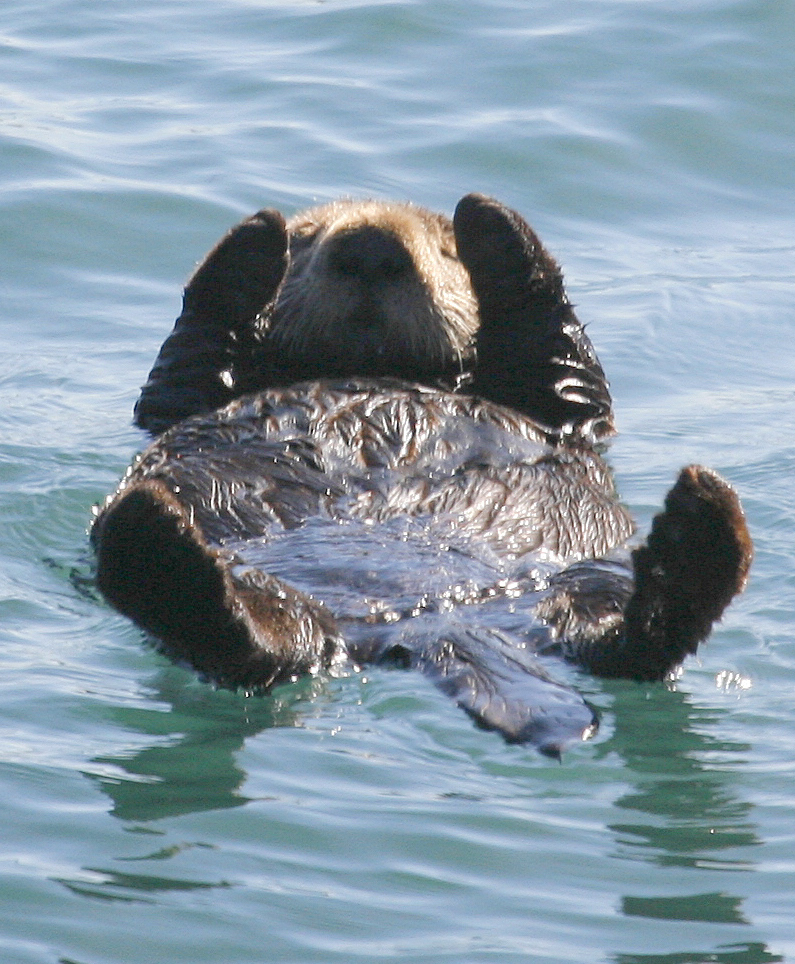
For day 10 of my advent calendar, I thought we'd have a flashback to this summer's Big Blue Live. You may remember that the Sea Otters of Monterey Bay stole the show!They relax on the waters just of the coast of America and surprisingly are fairly closely related to the weasel. They are perfectly adapted to spend their days lolling back on the water, with their thick fur they can stay warm and toasty

I thought I'd leave you with some of my favorite sea otter pictures.... (prepare for a overload of cuteness!)


Monday, 19 October 2015

The Lemon Shark


Sharks are one of the most well known marine predators, however they're experiencing a huge worldwide decline. Scientists have estimated that around 90% of the world's marine predators have been lost from our oceans since 1950. This loss is primarily due to overfishing and was entirely preventable. The demand for shark products on Asian markets are ever increasing - sharks are also suffering from habitat loss. Many shark species use specific areas such as waters and surrounding mangroves.

Bimini is an island surrounded by mangroves. In fact, the island is the westernmost district of the Bahamas - 53 miles due east of Miami. The island is actually the closest point within the Bahamas to the US. Because of its healthy marine ecosystem it's a tourist hot spot. The surrounding mangroves provide nursery areas for sharks, other fish, conch and lobster. The lemon shark is perhaps one of most significant nearby species. The lemon sharks have been studied by the Bimini Biological Field Station for over 25 years. They're large species at the top of the food chain - this makes them the apex predator. They are fully grown at about 12-15 years. Once they reach this age, they're sexually mature. From here, they pup every two years for the rest of their life. The usual litter size is between 4 and 18 young. These sharks can live for over 30 years. They can grow a staggering 3 metres long. As part of their research, the scientists tag the sharks to monitor their movement and behaviour. As a result of this tagging it was found that they actually travel very long distances, one individual was tracked for over 1000km. The main idea is that once they've tagged the shark, scientists can look at how the shark behaves and interacts with the oceans.


Wednesday, 30 September 2015

The Vampire Squid

Given the proximity to Halloween - this is a very topical squid! This is the Vampire squid! It gets its name from the long arms which flow behind it, making it look like a Vampire's cape. As far as squid are concerned, this is actually quite a small squid - only about a foot in length. They prefer warmer temperatures so they can swim around more easily. They also only live in the depths of the water, this combined with their dark color means they're camouflaged really well so they can avoid predators. We don't know a lot about the Vampire Squid - in fact it's first sighting was in 1903. Although when it was first discovered, people first thought it was an Octopus! And of course because they live so far down, the only knowledge we have of them is if a fisherman accidentally catches one or any calculated research, and research costs money!


Monday, 21 September 2015

The Pink See-through Fantasia


The Pink See-through Fantasia, aside from the rather funky name it's an incredible creature which we've only just recently discovered. Before hand, all we knew was that somewhere there was an unknown species of free swimming sea cucumber. We first found it in the Celebes Sea- a remote area of the western Pacific Ocean around the area of Sulawesi in Indonesia, by a group of underwater photographers and scientists on a research expedition. We actually don't know much about the creature and there's no data on it at all.  

Sunday, 20 September 2015

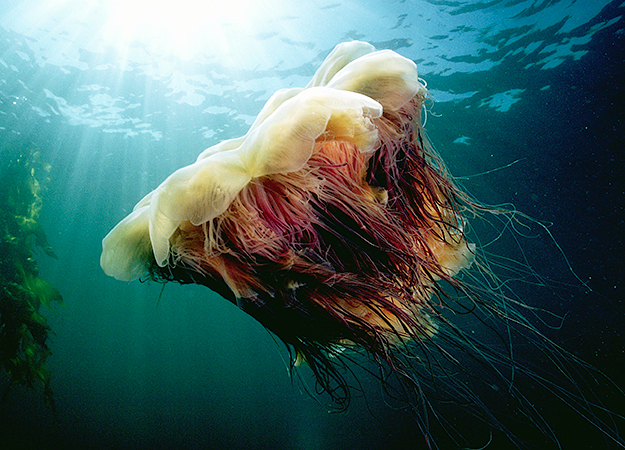
The Lion's Mane Jellyfish


This huge jellyfish, confined to the icy waters of the Antarctic, gently propels itself through the water, expanding its pink folds into an umbrella shape. They get their name from the fact they've got loads of long, thin hair like tentacles. For most of their lives, they swim close to, or at the bottom of the ocean, feeding on shrimp, zooplankton and other small fish. It feeds in a number of different ways, from killing small animals with stinging cells on their tentacles. As far as human contact is concerned, stings just cause localised redness and temporary pain- in healthy people their stings aren't known to be fatal. Vinegar can also be used to 'deactivate' the sting but due to the large number of tentacles, you need to seek medical attention straight after exposure. In 2010, it was estimated that 150 people were thought to have been stung from the remains of a lion's mane jellyfish which had broken up into countless pieces on the coast of New Hampshire in the US.  Given the sheer size of the jellyfish, scientists reckon that the incident was probably caused by just one jellyfish.


Thursday, 17 September 2015

The Great White Shark

Great White Sharks are probably thought of as one of the scariest creatures in the world - and you'd probably be right! They can actually be found in the coastal waters of all the main oceans.  Having said that, shark attacks are incredibly rare, and even rarer that they turn out to be fatal. They are actually huge, they average around 15ft long but some have recorded at 20ft! They're also very speedy, they can swim up to around 15mph! Their blue-grey color actually helps them to blend in with the color of the sea, particularly when they're viewed from above.

In the Oceans, they actually remain mostly threatened, their only natural predators are the killer whale, but they are however threatened by us, so much so they're actually classed as vulnerable on the endangered species list.

Even though we might not be able to directly help the Sharks, one thing we can do to help is to not buy the 'products' people make from them from their jaws to other products made from their fins.

Together, we can save the Great White Shark.


Wednesday, 16 September 2015

Finding Nemo....


.... or a clownfish! :)

The clown fish (also called anemone fish) are actually more or less all identical but they have subtle differences in shape and live in different habitats. Of all the fish, they're probably the most recognizable, mainly for the obvious movie connections! Before they take up residence, they perform a dance with another fish, gently touching the other fish until they become acclimatized to the nearby fish. They also have a layer of mucus on their skin to make it immune from the anemone's sting. As far as fish are concerned they can live for a surprisingly long time - up to 10 years in the wild!

Weirdly, all clown fish are born male and have an ability to change sex, although just to become the dominant female. However they can't switch back.


Thursday, 3 September 2015

The odd life of the Red Lipped Batfish | #WeirdestAnimals

You probably never even knew this fish existed - come to that, neither did I! They do look like one of the most characterful fish I've ever seen, they have a long nose and what looks like very heavily made up red lips! Only thing is, it's only the males who have the made up lip! Scientists think that this is all down to the males trying to attract the females. Although, these fish can't swim - or at least not very well! Even though they're not great swimmers they can walk along the ocean floor using their fins as make shift legs. They're actually quite rare -you can only really find them around the Galapagos Islands, but don't worry they're harmless! The question is, what do you think of their lips?


Wednesday, 2 September 2015

The Sea Life Trade!


Next time you hit the beach (admittedly, it is autumn so you might not be doing that for a while!) watch out for nearby shops selling dried seahorses, shells or even Puffer Fish. Sea horses are amazing creatures found across the world. Unfortunately, their body shape means they're not particularly good swimmers so they can easily die of exhaustion, which, of course means that they're vulnerable to trade like this.

A campaign by the amazing Seahorse Trust thinks that millions of them could be illegally imported over the internet which could be driving some species to extinction!!! It's not necessarily that shop owners know that it's illegal, it's just cheap and gets them money. Even though it might not seem like there's much we can do, there's something everyone can do - just don't  buy them in the shops! Then we can starve the trade of money so it will stop!

Make sure you check out The Seahorse Trust: www.theseahorsetrust.org